
Supplement Packaging Service
Commercial Supplement Packaging Services
Packaging support for supplement brands, private label projects and B2B buyers across bottles, pouches, stick packs, sachets, blisters and cartons. We review pack format, fill quantity, protection needs, artwork, coding and secondary packaging as one commercial scope.
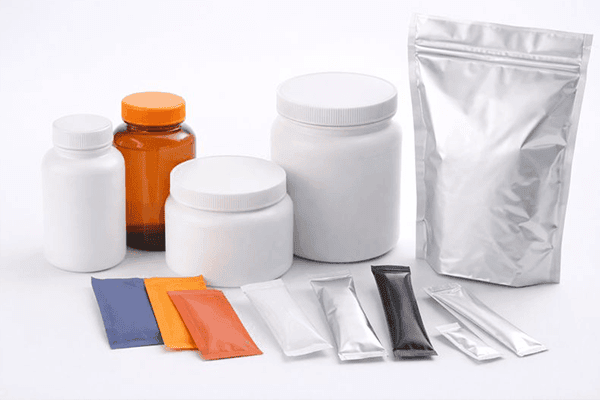
Packaging Strategy
Choose Packaging Around the Product
A packaging decision should start with the product and commercial route, not with appearance alone. Product behavior, serving plan, protection requirements and downstream handling all affect the final pack.
Product Format
Match the pack to the dosage form, product behavior, handling needs and intended shelf conditions.
Fill & Serving
Align count, net weight or fill volume with the serving plan and practical pack dimensions.
Protection & Closure
Review barrier, closure and seal requirements around product protection and the selected pack route.
Retail & Shipping
Plan retail presentation, secondary packaging and downstream shipment requirements around one commercial pack.
Commercial Formats
Commercial Packaging Formats
The practical format depends on dosage form, serving presentation, product protection and commercial quantity. Final dimensions, component availability and MOQ are confirmed during project review.
Bottles & Jars
Common for capsules, tablets, softgels, gummies and selected powders where count, closure and label area matter.
スタンドアップパウチ
Flexible multi-serve packaging for gummies and powders with zipper, printed-film and secondary-pack options.
Stick Packs & Sachets
Single-serve powder or compatible liquid formats where fill weight, film structure, sealing and coding must align.
Blister & Carton Packs
Unit-dose presentation for suitable solid formats, with cavity, foil, carton and tooling requirements reviewed by project.
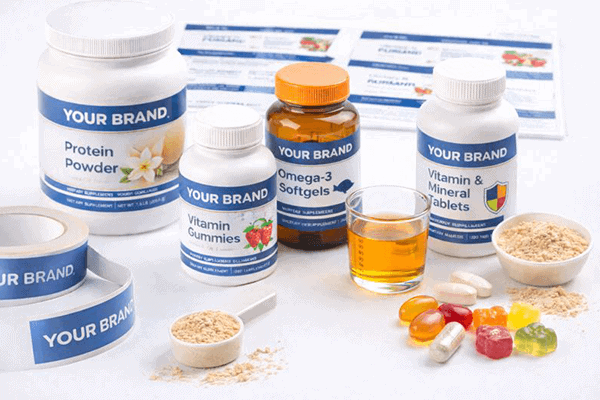
Artwork & Dielines
From Pack Specification to Approved Artwork
The actual packaging specification should come before the final artwork. This keeps the dieline, print area, barcode position, coding zone and finishing instructions aligned with the component that will be produced.
- 01確認
Lock Pack Spec
Confirm the actual bottle, pouch, sachet, blister or carton dimensions before artwork is finalized.
- 02ISSUE
Confirm Dieline
Use the approved dimensions, print area, label panel or film layout rather than designing against an assumed template.
- 03BUILD
Prepare Artwork
Prepare editable artwork with barcode, coding zone, finish direction and other project-specific print elements.
- 04レビュー
Review Proof
Check dimensions, artwork version, print placement and production notes before proof approval.
- 05APPROVE
Approve for Print
Where applicable, confirm the proof, printed sample or packaging reference before commercial production.
Packaging Quality Review
Packaging Checks Before Commercial Release
Packaging quality is more than print appearance. The approved fill basis, closure or seal, artwork version, coding and downstream pack configuration should remain aligned before commercial release.
Count, Weight & Fill Basis
Keep the retail unit aligned with the approved count, net weight, fill volume or serving plan.
Closure & Seal Condition
Review applicable cap, induction seal, zipper, heat seal or blister-seal requirements for the selected format.
Artwork & Print Match
Confirm the approved artwork version, print area and visible pack presentation before release.
Coding & Secondary Pack
Align batch coding, carton configuration, case packing and other downstream requirements with the project brief.
Packaging Documentation
Packaging Documentation for Commercial Supply
A controlled packaging handoff keeps component, artwork and print assumptions consistent between quotation, proofing, production and repeat orders.
包装仕様
Primary pack format, dimensions, material direction, closure, count or net-weight requirements.
Dieline & Dimensions
Approved label panel, pouch or sachet layout, carton dimensions or other print-area references.
Artwork Approval
Controlled record of the approved artwork version used for the commercial packaging project.
Print Proof or Sample
Applicable proof, print reference or packaging sample used before the final production run.
Coding Plan
Defined location and format for lot, manufacturing, expiry or other approved variable data where required.
Carton & Case Specification
Secondary packaging, case configuration and shipment-pack requirements where they are part of the project.
Packaging RFQ
What to Include in Your Packaging RFQ
A clear packaging brief reduces assumptions around component size, fill target, artwork, print method and quantity. The more defined the pack route is, the more useful the first quotation can be.
Product & Dosage Form
Share whether the product is a capsule, tablet, gummy, softgel, powder, liquid or another defined format.
Pack Size & Fill Target
Provide count, net weight, fill volume, serving plan or other unit requirements for the retail pack.
Pack Route & Artwork Status
Define bottle, pouch, stick, sachet, blister or carton direction and whether artwork files are already available.
Quantity, Market & Timing
Include expected quantity, destination market, launch timing and any known component or material preferences.
Packaging Quote Process
How to Get a Packaging Quote
Start with a concise packaging brief. We review the format and component route, then return the commercial quote and next steps.
Share the Packaging Brief
Send the product format, pack direction, fill target, artwork status and expected quantity.
Review Format & Components
We review the practical packaging route, component requirements, print basis and project assumptions.
見積もりの受け取りと今後の流れ
Receive the commercial quotation together with applicable artwork, proofing, sampling and production requirements.
Supplement Packaging FAQ
Supplement Packaging Service FAQs
Can packaging be reviewed as a standalone service?
Packaging can be reviewed as a standalone project where the product, dosage form and commercial requirements are sufficiently defined. It can also be integrated with contract manufacturing or private label production so the product and pack are planned together.
How do standard components and custom packaging differ?
Compare the same material, dimensions, closure or seal, barrier requirements and fill basis. Confirm current standard-component availability rather than assuming a size is in stock. A custom bottle, mold, printed film or carton may need tooling, proofs and separate component minimums; these are priced and scheduled for the particular project.
Do I need the final packaging size before creating artwork?
The actual pack specification should be confirmed before final artwork is locked. This allows the design to use the correct dieline, label area, print zone, barcode position and coding space instead of an assumed template.
Can you review labels, printed pouches and cartons?
Artwork can be reviewed for print readiness, dimensions, placement and production requirements within the agreed packaging scope. Regulatory label content remains the responsibility of the brand and should be confirmed for the destination market.
What determines packaging MOQ and lead time?
MOQ and timing depend on the pack format, component supplier, material, print method, customization level, artwork readiness, tooling and order quantity. Standard components are generally easier to source than fully custom packaging.
Which files and approvals are needed before packaging production?
Provide the selected component specification, approved dieline, editable artwork, fonts or outlined text, barcode and coding zones, color and finish instructions. Agree whether approval uses a digital proof, physical sample or another stated basis. Print-readiness review and destination-market label approval are separate responsibilities, both to be named in the project scope.
Supplement Packaging Inquiry
Ready to Build Your Commercial Supplement Pack?
Share the dosage form, pack direction, count or fill target, artwork status, destination market and expected quantity. Our team can review packaging options, quotation requirements and next steps.