
Private Label BCAA Powder
Develop a BCAA drink around a defined amino-acid ratio, a practical serving and a flavor your brand can approve. HerbalExt supports ingredient review, sensory development, sampling and OEM & ODM packaging for sports nutrition portfolios.
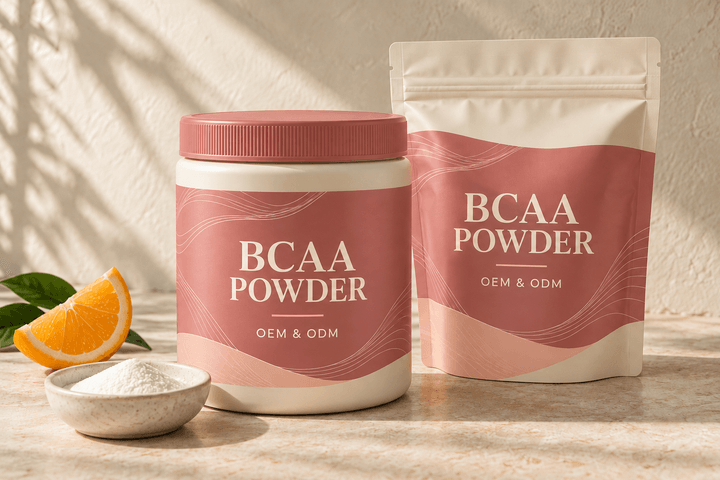
Ratio, Serving and Drink Experience
BCAA powder development connects three decisions: the amount of leucine, isoleucine and valine, the weight of the complete serving, and the experience of drinking it. A ratio on the front label explains only part of the formula. The flavor system, liquid volume and powder behavior determine whether that concept becomes a practical product.
HerbalExt supports private label BCAA projects for sports nutrition brands, fitness ranges and distributors. Begin with a clear amino-acid brief and the role of the SKU in your portfolio. Then review materials, sensory options and the pack together. The examples below are directions for development, with feasibility and commercial details confirmed for the selected project.
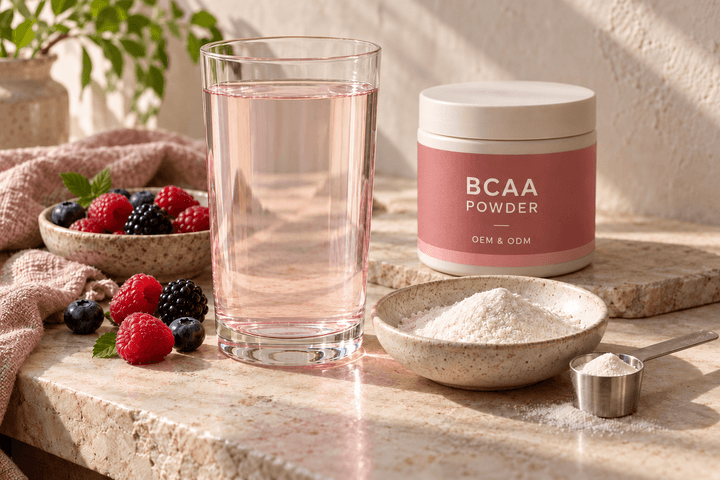
BCAA Product Directions
Focused BCAA Formula
A dedicated three-amino-acid direction with a defined leucine, isoleucine and valine relationship. This route keeps the formulation brief focused on ingredient identity, total BCAA contribution and the intended preparation. An unflavored concept still needs a clear sensory acceptance target.
Flavored BCAA Drink
A fruit-style drink mix developed at a specified dilution. Compare citrus, berry or tropical directions against the bitterness and finish of the selected base. Flavor, acidity, sweetener and color choices should follow the intended beverage experience and ingredient-list preferences.
BCAA With Electrolytes
A blended direction in which the amino-acid targets and selected mineral sources are specified separately. Mineral salts add their own sensory and formulation requirements. The complete blend needs evaluation before any product positioning, serving instructions or label claims are settled.
Measured Serving Packs
A portion sachet direction for a defined powder serving. Review fill volume, pack opening and the customer's access to water or a shaker. The same recipe may also be considered for a tub or pouch, with separate portion and packaging approval.
Specify Each Amino Acid
Each Amino Acid
BCAAs are the three essential amino acids leucine, isoleucine and valine. Name the intended ingredient form and amount of each in the formula brief. Agree identity and assay requirements for the proposed materials rather than relying only on the name of a premix.
Blend Composition & Origin
Ask how a supplied blend's ratio is defined and supported. Source and processing information also matter where the brand has ingredient-origin or vegan requirements. Review any dispersing agents, carriers or other constituents in the proposed material. They can affect the ingredient list and sensory work, and should be visible before a supposedly simple three-ingredient concept is approved.
Read the Serving Correctly
Keep the ratio, amino-acid contribution and finished serving distinct. They answer different questions about the product and must reconcile in the formula.
| Formula detail | Meaning for development |
|---|---|
| Leucine:isoleucine:valine ratio | The relative proportions, with the order and weight basis stated. |
| Total BCAA contribution | The combined proposed amount of the three amino acids. |
| Complete serving weight | All amino acids plus flavor, sweetener, acids and other ingredients. |
| Preparation volume | The amount of liquid used to judge intensity, texture and appearance. |
| Portion and pack | The scoop or sachet checked against the actual blend and proposed net content. |
A ratio is not a dose recommendation or evidence that one finished product produces a better outcome.
BCAA or a Broader Formula
Product Category
Decide whether the SKU is meant to be a dedicated BCAA product, an EAA product or another sports drink blend. BCAA names a set of three essential amino acids; a broader EAA brief requires additional ingredient decisions. Changing category changes the recipe and the label, not just the wording on the tub.
Range Positioning
If a range already contains protein, creatine or a pre-workout powder, explain the role of the new SKU without promising an unverified performance advantage. Research on an ingredient or a different formulation does not establish an outcome for this product. Portfolio position should guide the formula brief, while any consumer claim receives its own evidence and market review.
Balance Bitterness and Finish
Amino Acid Bitterness
The sensory work needs to account for the amino-acid base. BCAA-containing solutions can have a pronounced bitter character, especially as the concentration changes. Compare the intended serving in its actual liquid volume before deciding that a stronger flavor alone will solve the problem.
Flavor Balance
Review acidity, sweetness and aroma as a system. A citrus direction can be explored for a sharper drink; berry or tropical directions may call for different sweetness and aroma balance. Record the first sip, the taste after repeated sips and the lingering finish. Increasing sweetness may create an aftertaste of its own. Confirm sweetener preferences and ingredient exclusions at the brief stage so sample revisions remain relevant.
Wetting, Dispersion and Appearance
Define the mixing expectation in observable terms. Does the product need to wet quickly under a spoon, disperse in a shaker, or leave a particular appearance after standing? Wetting, dissolution and a clear-looking drink are different targets. Establish the liquid temperature, water volume and mixing method used for comparison.
Discuss particle characteristics and any instantization or dispersing system proposed by the ingredient supplier, then evaluate the complete formula. Watch for dry powder at the surface, persistent particles, foam and material left in the bottle. A processing term on a material sheet does not guarantee that every flavored blend will meet the same target. Match pack directions to the method actually approved.
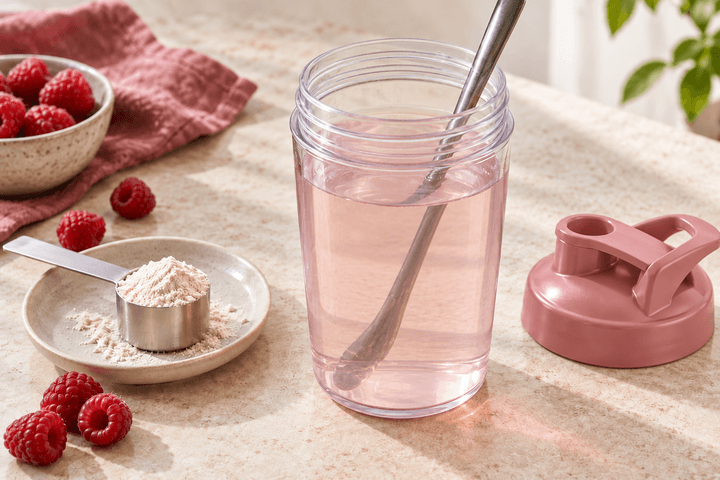
Develop Flavors on One Basis
Shared Formula Basis
When planning several flavors, use a shared preparation method and a clear formula record. Keep track of whether the amino-acid contribution stays the same as acids, flavors, colors and sweeteners change. Each variant still has its own sensory and ingredient-list review.
Color & Appearance
Compare appearance under ordinary use conditions, including the drink after a short period of standing. A vivid color should be a deliberate brand choice with suitable ingredient permission, not evidence of amino-acid strength. For a restrained-color or no-added-color brief, agree the expected appearance of the selected ingredients and assess whether it remains acceptable across the proposed flavors.
Portions and Packaging
A tub or resealable pouch needs a serving tool that works with the actual blend. Scoop volume is not the same measurement as powder mass. Review the agreed portion method, usable headspace and access to the powder before confirming container size or servings per pack.
Single-serving sachets need enough fill space for the complete recipe, including its sensory ingredients. Check opening and emptying behavior alongside film and seal requirements. For every format, discuss moisture protection, closure performance, transport and storage. Custom printing, component minimums and the selected packing approach belong in the quotation rather than being assumed from a concept image.
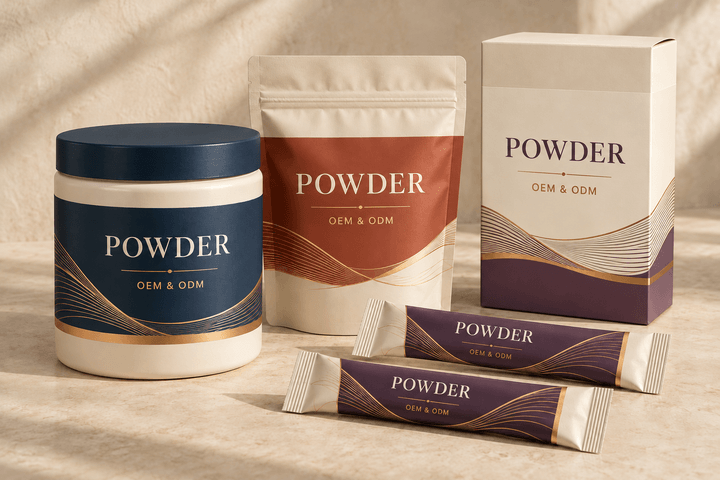
Formula and Brand Development
Formula & Product Direction
An OEM brief should provide the intended formula, amino-acid specifications and proposed pack. Confirm whether the ratio refers to individual ingredients or a supplied premix and disclose every other ingredient. Technical review can then address sourcing, processing and the destination-market requirements.
Project Scope
For ODM work, define the category, serving concept, flavor preferences and ingredient exclusions. HerbalExt can discuss development around those goals, with samples used to settle the finished drink. Reference products help explain sensory preferences, but their labels do not disclose every production detail. Agree responsibilities for formula approval, packaging and claim review in the project scope.
Approve the Whole Serving
A good sample review evaluates the finished formula at its intended dilution. Keep the recipe and material versions attached to the approval record.
Confirm the amino-acid brief
Record the ratio order, ingredient forms and proposed contribution of each amino acid before flavor work.
Compare the sensory system
Evaluate flavor, acidity, sweetness and bitterness with the actual BCAA base and intended water volume.
Test ordinary preparation
Use the planned mixing tool and temperature. Note wetting, particles, foam, aftertaste and changes after standing.
Review portion and instructions
Check the scoop or sachet, serving weight, pack contents and draft directions against the selected recipe.
Manufacturing the Agreed Blend
A BCAA production plan needs to preserve the defined composition and the sensory target through blending and filling.
Set material acceptance
Confirm ingredient identity, assay requirements, origin documents and relevant physical criteria for the chosen materials.
Lock the formula
Reconcile the three amino acids, sensory system and any other ingredients with the serving and label brief.
Review blend distribution
Consider the actual powders' physical differences and the distribution of lower-inclusion flavor or sweetener components.
Plan the fill
Match the finished blend to the selected portion tool, net content, container, film and seals.
Complete release review
Check agreed composition, sensory, packaging and batch records against the project specification before shipment arrangements.
Verify Composition and Pack Quality
Discuss methods that answer the composition questions in your brief. Individual amino-acid identity and assay information are relevant to a defined ratio; an unrelated headline protein figure does not demonstrate that relationship. Confirm whether checks apply to individual inputs, a supplied premix or the finished product.
The quality plan should also address appropriate microbiological and contaminant criteria, moisture and the physical behavior relevant to the recipe. For sports channels with specific screening or certification requirements, identify those requirements before quotation and verify the actual scope available. Testing, certification and shelf-life support must be confirmed per project; they are not established by a sports-themed pack or a product-category description.

Label the Actual Formula
Product Label
Review the selected amino-acid forms, added mineral sources and other ingredients for the destination market. A BCAA product, an EAA product and a multi-ingredient sports drink can have different formulation and labeling questions. The formula name should describe the product being developed.
Positioning & Evidence
Check ingredient order, quantitative statements, portion directions and any proposed nutrition or performance claim against the complete recipe. A no-added-sugar, vegan or caffeine-free direction needs its own review of all inputs and applicable rules. Keep front-of-pack wording consistent with the approved specification, rather than extending a claim from another product in the range.
MOQ and Project Economics
MOQ is available on consultation. Provide the target ratio, BCAA contribution, flavor count, pack format, destination and expected quantity. Source requirements, specific analytical work and custom packaging can change the cost basis and order structure.
Compare proposals using the same total amino-acid contribution, finished serving and net pack contents. A smaller serving or different ratio can make a price comparison misleading. Confirm sample scope, revisions, packaging responsibilities and the current production schedule in the offer. Multiple flavors may share a concept while still requiring separate materials and component quantities.
BCAA Powder FAQs
What does the BCAA ratio describe?
It describes the relationship between leucine, isoleucine and valine, usually in that stated order. The brief should specify the order and whether the ratio is by weight. A ratio does not tell you the total BCAA amount or the complete serving weight; those figures must be defined separately.
Can a different amino-acid ratio be requested?
A target ratio can be discussed subject to material sourcing, formulation feasibility and market review. Confirm the identity and amount of each amino acid, then evaluate the finished drink. A larger leucine number alone does not establish a better result or provide evidence for a finished-product performance claim.
How is a BCAA formula different from an EAA formula?
BCAA refers to leucine, isoleucine and valine. An EAA formula covers a broader essential-amino-acid brief and needs its own ingredient amounts and specifications. Decide which category your brand intends to sell before developing the label, serving and flavor system.
Can flavor and sweetness be customized?
Citrus, berry, tropical and other directions can be reviewed around the selected amino-acid base. Compare bitterness, acidity, sweetness and aftertaste at the intended liquid volume. The complete formula needs sampling because a flavor tested in plain water does not represent a BCAA drink.
Can electrolytes be included in the formula?
An electrolyte-containing blend can be assessed with a defined purpose and separate ingredient targets. Selected mineral salts affect taste, total serving weight and labeling. Confirm the actual formula and the destination-market requirements before making any hydration or performance statement.
Does an instantized ingredient guarantee a completely clear drink?
No universal appearance or mixing result should be assumed from a processing description. Review the proposed material's specification and test the complete recipe under the intended preparation conditions. Wetting, dispersion, dissolution and visual clarity are different observations, so the sample target should describe each relevant requirement.
Can the powder have a vegan positioning?
Review the origin and processing information for every ingredient, including amino acids, flavors and any processing aids. A proposed sourcing route alone does not settle the complete product's vegan claim. Required supporting documents and any third-party certification must be confirmed for the actual project.
What determines tub, pouch or sachet suitability?
The finished serving weight, powder volume, fill behavior and storage requirements guide the choice. Tubs need workable scoop access; pouches need an effective closure; sachets need adequate fill space and clean powder release. Each format requires a suitable component and artwork specification.
What are the MOQ and development lead time?
MOQ is available on consultation. Formula complexity, amino-acid specifications, flavor variants, tests, packaging and order quantity determine the commercial basis. Sample scope and current schedules are confirmed after the brief is reviewed. No fixed turnaround applies to every BCAA project.
Develop Your BCAA Drink
Share your intended amino-acid ratio, serving concept, flavor preferences and packaging direction. Add the destination market and an order estimate so the discussion can address ingredient specifications, sample development and the quotation basis for your brand.