
Private Label Colostrum Powder
Develop a bovine colostrum powder with clear material specifications, a considered dairy sensory profile and practical branded packaging. HerbalExt supports source review, formulation, sampling and OEM & ODM project planning for wellness and specialty nutrition brands.
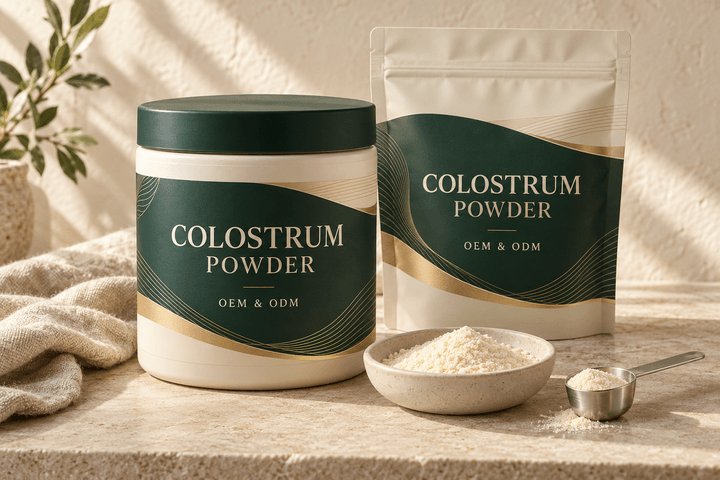
Define the Colostrum Material
Colostrum powder development begins with the ingredient itself. Bovine source, composition, processing information and any requested marker specification need to be understood before a brand settles the pack story. A striking jar or an IgG figure without an agreed measurement basis cannot replace that work.
HerbalExt supports private label colostrum powder projects with formula review, sampling and commercial packaging planning. Build the product around a defined material and an intended preparation, then assess the dairy aroma, texture and serving format. This creates a clearer basis for sample approval and quotation while keeping ingredient facts distinct from any claims proposed for the finished product.
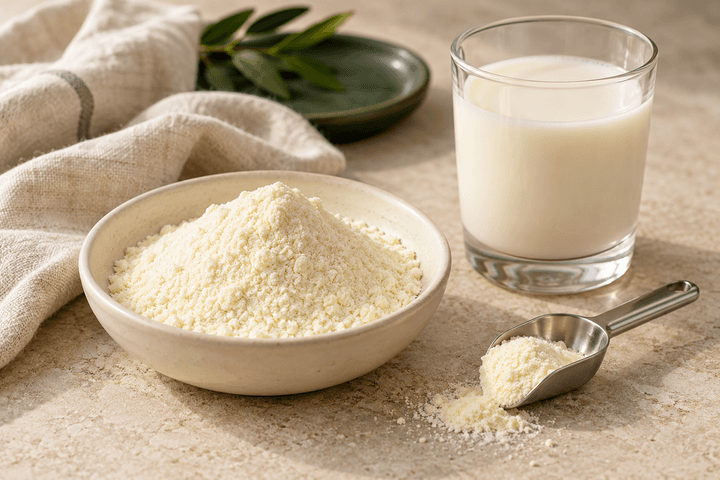
Colostrum Product Directions
Choose a route based on ingredient transparency and the intended use experience. These are development options, with material availability and complete formulas reviewed per project.
Focused Colostrum Powder
A simple ingredient direction for brands that want the selected bovine material to lead. Establish composition and source expectations early, then evaluate the natural dairy character in water or another intended liquid. Any additional processing aids or ingredients require clear disclosure.
Flavored Dairy-Style Mix
A vanilla, cocoa or other compatible sensory direction developed around the actual base. Define the desired body, sweetness and finish, together with the colostrum contribution per serving. Flavor and sweetener selections change the finished ingredient list and total weight.
Colostrum Nutrition Blend
A broader blend in which colostrum has a defined place alongside separately reviewed ingredients. Document the purpose and amount of each addition. Market classification, compatibility and the label basis need review for the complete formula.
Portion Sachet Concept
A measured-serving format for a compact carton or multi-sachet pack. Review fill volume, film and seal requirements, opening and powder release. Sachets require their own commercial component plan rather than simply reducing a tub design.
Source, Composition and Processing
Origin & Source Records
Specify bovine origin and identify the source documentation required for your market. If a claim concerns collection timing, farm practice or geographical origin, agree the records that would substantiate it for the selected supply. Such statements should follow confirmed documentation rather than be assumed from the category name.
Composition & Processing
Discuss the material's composition and how it has been processed. Protein, fat, lactose and moisture information may be relevant to different briefs; request the actual specification instead of treating all colostrum powders as equivalent. Processing descriptions should be specific enough for technical review. No collection window, drying method, compositional percentage or source certification is asserted here for an unspecified ingredient.
Put Marker Figures in Context
If the brief includes IgG, define precisely what the figure describes. A material specification and a finished-product declaration need different supporting calculations and evidence.
| Specification question | Point to resolve |
|---|---|
| What is being measured? | Name IgG, total protein or another required attribute separately. |
| How is it measured? | Agree the analytical method, sample preparation and laboratory reporting. |
| What is the reporting basis? | Identify units and whether the result is reported as supplied or on another defined basis. |
| Which material does it describe? | Distinguish the incoming ingredient from the complete blend. |
| What will the pack say? | Review any quantitative statement against the finished recipe and applicable rules. |
IgG is an ingredient specification question, not a substitute for finished-product efficacy evidence.
A Serving That Fits the Recipe
Set the intended colostrum contribution separately from the complete powder serving. A flavored blend may include other ingredients, so a scoop weight does not on its own describe how much colostrum it contains. Reconcile the recipe and any proposed label declaration before setting pack contents.
Consider the amount of liquid the customer is expected to use and the desired drink texture. That relationship affects concentration, mouthfeel and the sensory system required. Choose a scoop or sachet after checking the actual blend's volume and fill behavior. Final amounts and instructions belong to the market-reviewed formula; this page provides no consumer dosing recommendation.
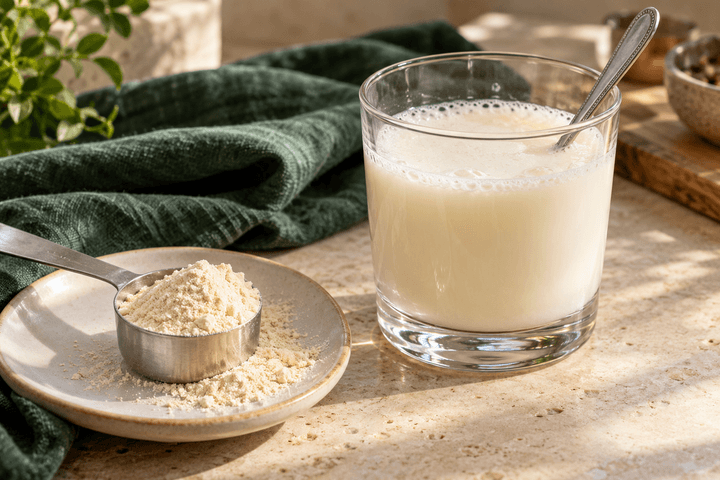
Work With the Dairy Character
Base Dairy Character
Start sensory development with the unflavored base. Review its dry aroma and the prepared drink's color, dairy notes, body and finish. Natural variation should be considered when setting practical acceptance criteria, but every source difference should not be dismissed as normal without review.
Flavor Compatibility
For a flavored concept, compare options that suit the intended preparation. Vanilla can be explored for a lighter dairy-style drink; cocoa may require a different balance of body and sweetness. Fruit or acidic concepts need their own compatibility assessment. Evaluate sweetener aftertaste in the complete formula and at the intended dilution. A familiar flavor name does not guarantee that it will cover the selected base acceptably.
Set Useful Mixing Directions
Preparation Method
Agree whether the product is intended for water, milk or a blended drink. Record temperature, liquid amount, addition order and mixing tool in the sampling method. Look at wetting, dry clumps, surface foam, settling and what remains on the vessel after use.
Technical Approval
Processing and preparation conditions matter when the material specification includes protein-related attributes. Discuss the proposed preparation instructions with the technical team instead of adding an arbitrary hot-drink claim. A mixing trial demonstrates the experience under those conditions; retention of a specified marker or a shelf-life statement requires appropriate analytical evidence. Keep those approval questions connected without treating them as the same test.
Position a Specialty Dairy Powder
Product Format
A focused colostrum range can lead with source disclosure, ingredient clarity and an easy preparation routine. A flavored blend may suit a brand that wants a more controlled beverage experience, while a sachet format can make the intended portion easier to communicate.
Audience & Positioning
Choose the product's audience and market classification before expanding the range. This brief concerns a brand development project and does not establish suitability for infant feeding or any medical use. Wellness positioning should stay within the claims supported for the finished product. Avoid letting an ingredient marker become a promise about immune function, digestion or disease.
Plan the Dairy Powder Pack
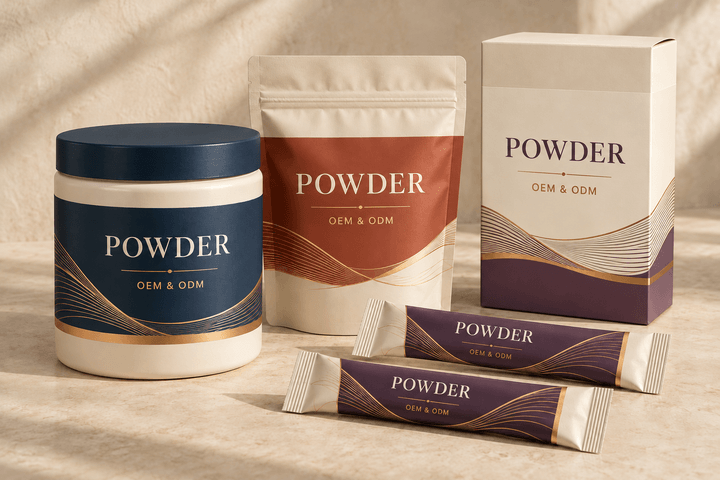
Review packaging against the selected formula's moisture and storage requirements. A tub should provide practical scoop access and an effective closure for repeated use. Container volume needs to accommodate the finished powder and portion tool without relying on net weight alone.
Resealable pouches and portion sachets can also be assessed. Consider seal design, moisture protection, opening and powder release, with sufficient space for the required dairy and ingredient information. Confirm component suitability, transport conditions and the basis of any proposed shelf life for the actual recipe. Packaging concepts illustrate a format; production specifications and artwork still need separate approval.
OEM & ODM Development
Formula & Product Direction
An OEM brief should identify the formula and the colostrum material requirements, including any required analytical method. Review the requested documents and source statements before procurement. If a reference product is supplied, explain which features matter rather than relying on its front label to define the recipe.
Project Scope
For ODM work, begin with the product direction, desired preparation and specification priorities. HerbalExt can discuss sampling and branded packaging around those requirements. Confirm who approves the ingredient, finished formula, analytical scope and artwork. Document any proposed substitutions, since changing the colostrum base may affect composition, flavor and the evidence needed for the label.
A Colostrum Sample Review
Keep the sample's material reference and formulation version together. This is particularly useful when comparing different source specifications.
Set the material criteria
Agree source requirements and which composition or marker information needs review before selecting a base.
Evaluate the preparation
Use the proposed liquid and mixing method. Record dairy aroma, body, clumps and the appearance after standing.
Compare recipe options
Assess any flavor, sweetener or other additions at the intended serving. Track the colostrum contribution in each version.
Resolve portion and pack
Check serving weight, scoop or sachet volume, draft directions and packaging needs. List outstanding analytical questions before commercial approval.
Manufacturing Around the Specification
Production planning should connect the incoming material requirements to the finished formula and packaging.
Confirm the ingredient
Set the approved bovine colostrum specification, required supplier information and incoming acceptance checks.
Finalize the recipe
Identify the colostrum contribution and each other ingredient, including the complete sensory system.
Review handling and blending
Agree a suitable process for the selected powder and any lower-inclusion ingredients in the blend.
Coordinate the pack
Match the fill specification, portion format, seals and current artwork to the approved formula.
Complete release review
Review agreed testing and production records, including any specified marker checks and label reconciliation required for the project.
Quality Beyond a Headline Number
Build the quality plan from the actual material, market and finished recipe. Discuss appropriate identity, microbiological and contaminant criteria, along with moisture and relevant composition measurements. Clarify which checks apply to incoming colostrum and which are intended for the finished blend.
Where IgG information is required, method and sample preparation matter. Agree the reporting basis and the documents that accompany supply. Processing history, marker content and finished-product health effects are distinct matters; one should not be used to imply another. Confirm testing availability and any shelf-life support per project. No measured protein content, IgG percentage, microbiological result or certification is claimed by this page.

Dairy and Market Details
Product Label
Bovine colostrum is dairy-derived. Include milk-allergen review from the first brief, together with the complete recipe's other ingredients. Lactose content and the milk-allergen declaration are separate questions and should be documented accordingly. For the United States, milk is a major food allergen.
Positioning & Evidence
Review ingredient permission, product classification, nutrition labeling and any proposed claim in the destination market. A source description or marker figure does not establish approval of the finished product. Artwork should reflect the actual formula, preparation instructions and net contents, with its final language reviewed before printing.
Commercial Scope and MOQ
MOQ is available on consultation. Share the required material specification, proposed serving, pack format, destination and expected order. A more detailed marker or source requirement can affect ingredient sourcing, testing scope and the commercial basis.
Confirm whether the offer includes sample revisions, analytical work, custom printed components and packing. Ingredient and packaging minimums may differ. Sampling and production schedules are settled after the selected material, formula complexity and component availability have been reviewed; no fixed turnaround is promised for this category.
Colostrum Powder FAQs
What source information is needed for bovine colostrum powder?
Define the proposed bovine material, origin requirements and the supplier documents your market needs. Discuss collection and processing information where it matters to the ingredient specification. Any first-milking, farm-practice or other source claim needs supporting records for the actual material being purchased.
Does colostrum powder require milk allergen labeling?
Bovine colostrum is dairy-derived, so milk-allergen planning belongs in the project from the start. Review the finished product under the destination market's rules. Milk is a major food allergen in the United States. Flavor ingredients and other additions must also be included in the allergen review.
Can an IgG percentage be specified?
A project can discuss an IgG-related material specification, subject to sourcing feasibility. Agree the analytical method, unit, reporting basis and acceptance criteria. Confirm whether a declaration refers to the raw material or finished blend. No IgG percentage is established by this product page.
Is total protein the same measure as IgG?
No. Total protein and IgG are different analytical questions and need their own defined methods and reporting basis. A total-protein result should not be presented as an IgG measurement. The project should identify which information is required for purchasing, formulation and any proposed label statement.
Can the product be unflavored or developed as a flavored mix?
Both directions can be reviewed. Assess the selected base's dairy aroma, mouthfeel and appearance in the intended liquid before choosing a flavor. Vanilla, cocoa or other compatible concepts need finished-recipe sampling. Unflavored does not mean the ingredient will have no taste or aroma.
Should mixing conditions be part of sample approval?
Yes. Record liquid type, temperature, volume, order of addition and mixing method. Compare wetting, clumps, foam, visible settling and the drink's finish after standing. Any preparation temperature used in the directions should be consistent with the selected material and the project's stability requirements.
Does a processing term establish finished-product quality?
A drying or heat-treatment description is one part of the material history. Request the actual processing information and the relevant analytical evidence. Different quality attributes need their own review, and the presence of a marker does not establish a health effect for the finished product.
Which packs and order quantities can be discussed?
Tubs, resealable pouches and portion sachets can be assessed around the final serving weight, powder volume and storage requirements. MOQ is available on consultation. Ingredient requirements, tests, printed components and the proposed quantity all contribute to the quotation.
What should a colostrum project brief include?
Send your destination market, bovine source requirements, requested material specification, proposed serving and intended preparation. Add flavor preferences, the pack concept and an order estimate. Identify any IgG or source statement you want to use so its documentary and analytical requirements can be reviewed before artwork.
Build Your Colostrum Brief
Send the bovine material requirements you want to explore, the intended preparation and your packaging concept. Include the destination market, any proposed source or IgG statement and an order estimate so the discussion can cover documents, samples and commercial feasibility.