
Private Label Creatine Powder Manufacturer
Build a creatine powder around a clear ingredient specification, practical serving and dependable pack. HerbalExt supports unflavored monohydrate, flavored drink mixes and compatible sports-nutrition blends with formula review, sampling and OEM & ODM packaging development.
Creatine, Clearly Specified
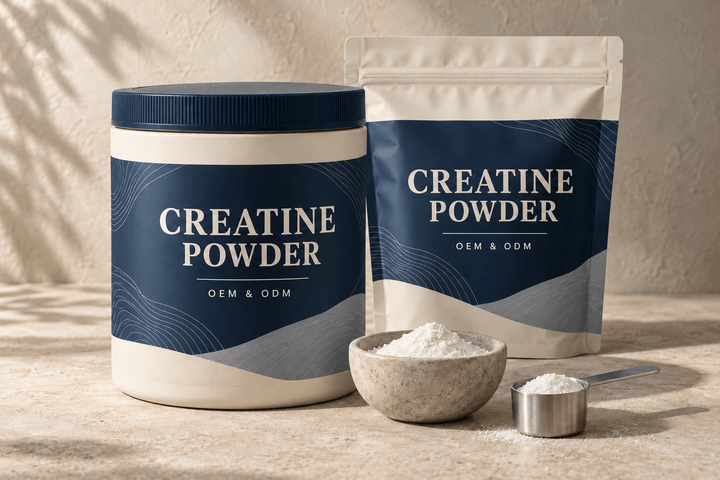
A straightforward creatine SKU still needs careful development. The ingredient form, particle specification, serving weight and pack count should describe the same product. A tub that looks right on a product listing can feel oversized after the actual powder density is measured; a familiar scoop can deliver a different weight with a different grade.
HerbalExt supports private label creatine powder projects for sports nutrition brands, gym portfolios, distributors and online retailers. Development can start with a single-ingredient concept or an existing formula for review. The work then connects material selection, sensory expectations, portion measurement, packaging and the documents needed for the intended market. Ingredient examples on this page are development directions; availability and final specifications are confirmed for each project.
Product Directions
Choose the role of the SKU before adding flavors or companion ingredients. These directions have different serving weights, label needs and sample criteria.
Unflavored Monohydrate
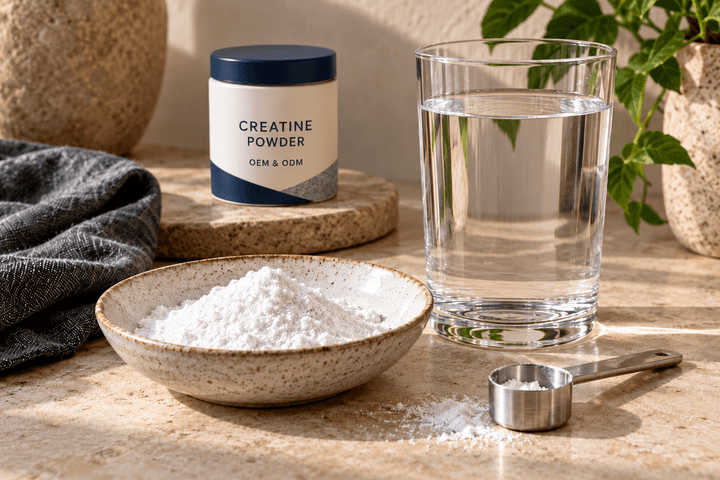
A focused creatine monohydrate powder with a short ingredient list. Priorities include identity and assay, particle characteristics, scoop accuracy, powder flow and a clear mixing experience. Suitable for a core sports-nutrition range where the buyer wants a simple product architecture.
Flavored Creatine Drink
A standalone creatine product with a developed citrus, berry or other beverage profile. Flavor, acid and sweetener contribute to total serving weight, so the creatine amount and the weight of the complete scoop must be specified separately.
Creatine and Electrolyte Blend
A combined drink-mix concept for brands building a coordinated training range. Review the selected mineral sources, salt character and total powder load alongside the creatine specification. The blend requires its own sensory and labeling assessment rather than inheriting an electrolyte formula unchanged.
Companion Sports Blend
Creatine combined with selected compatible amino acids or other permitted sports-nutrition ingredients. Define each ingredient and its amount before deciding whether a compact scoop remains realistic. A longer ingredient list is a different formulation brief, not an automatic product upgrade.
Material Choices
Creatine monohydrate is the most widely studied creatine form. Other forms should be assessed on their own identity, documentation and commercial purpose; a different chemical form or smaller particle size does not by itself establish a superior finished product.
Scroll to compare options
| Decision | What to define | What it changes |
|---|---|---|
| Ingredient form | Named creatine form, identification and assay basis | Formula calculation, ingredient statement and material comparison |
| Particle specification | Defined particle range or measurable micronized specification | Powder handling, texture and sampling acceptance |
| Material documentation | Supplier specification, origin and relevant analytical methods | Qualification and destination-market review |
| Supporting ingredients | Purpose and amount of each flavor, acid, sweetener or flow aid | Serving weight, sensory profile and label length |
A micronized description should be supported by the selected material specification. It is not a substitute for identity, assay or finished-product testing.
Serving and Scoop
Define the amount of the selected creatine ingredient, the total serving weight and the number of servings per pack as three linked values. For a flavored formula, the complete serving includes the beverage system. For a blend, it also includes every companion ingredient. These are formulation and label-planning decisions, not a dosing recommendation.
Select a scoop after checking the actual powder density and filling behavior. A volume marking alone does not confirm the weight delivered. Review a consistent level-scoop method, the space needed to reach the scoop inside the tub, and whether the serving count fits the proposed net content. Where single portions are preferred, sachet dimensions and fill feasibility need their own check.
Flavor and Finish
An unflavored product and a lightly flavored drink are separate sensory targets. Unflavored means no added flavor system; it does not promise the powder will be undetectable in every beverage.
Neutral Base
Review aroma, perceived texture and residual powder using the intended water or companion drink. Keep additions purposeful when a short ingredient list is central to the product.
Citrus or Berry
Set a recognizable flavor, an acidity range and a sweetness finish that work at the actual dilution. Compare the first sip and aftertaste rather than judging a dry flavor sample.
Sweetener Direction
Sugar-containing and high-intensity sweetener systems create different serving and label requirements. Stevia-based, sucralose-based or other permitted approaches can be reviewed against taste and market requirements.
Mixing Expectations
Preparation Method
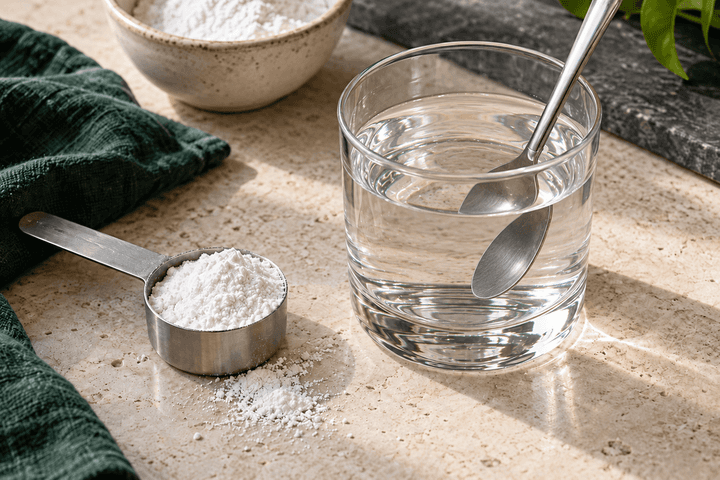
Approve a mixing method that resembles the intended use: named liquid, measured volume, realistic temperature and a spoon or shaker. Record visible particles, settling and the feel of the drink after an agreed standing period. A promise such as completely clear or instantly dissolved should never be inferred from the word micronized.
Consistent Comparison
Compare materials under the same conditions. More water, warmer water or vigorous blending can make one demonstration look better without establishing equivalence. For blends, also observe whether different ingredients settle at different rates. If a product is intended to be mixed shortly before consumption, develop instructions for that use; do not extend dry-powder shelf-life assumptions to a prepared beverage.
Packaging That Fits
Pack selection should follow net weight, measured density and portion format. Review moisture protection, seal integrity, label area and the practical opening experience together.
Scoop Tubs
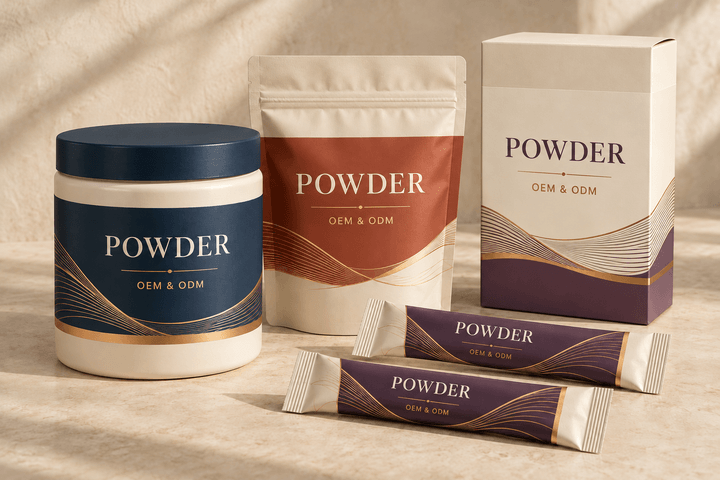
Plan fill volume, headspace, scoop access and closure. A compact single-ingredient product may need a different container proportion from a flavored blend with the same serving count.
Stand-Up Pouches
Consider a resealable pouch for a lighter retail or refill format. Check opening width, zipper cleanliness and whether the consumer can measure a serving without spilling powder.
Single Portions
Assess sachets or suitable stick formats for trial and portable packs. The fill weight, powder flow, seal area and retail carton count determine feasibility.
OEM & ODM Scope
Formula & Product Direction
For an OEM brief, supply the formula, material specifications and required pack configuration for feasibility review. For an ODM project, start with the preferred product direction and the few attributes that matter most: ingredient simplicity, flavor style, portion format or price position. Development can then compare choices with a common commercial basis.
Project Scope
The agreed scope can cover formula review, sampling, packaging coordination and production planning. Brand artwork remains tied to the approved formula and market review. A reference product can explain sensory expectations or pack size, but its label is not evidence that the same ingredients, claims or manufacturing method are appropriate for another market.
Sample Review
A useful creatine sample round resolves a small number of named decisions. Record comments against the agreed serving and preparation method so revisions remain comparable.
Set the Baseline
Confirm ingredient form, proposed serving, liquid and dilution. Separate material comparison from flavor comparison when both are changing.
Compare the Drink
Assess texture, visible residue, flavor strength and aftertaste. For unflavored powders, note the actual base beverage used.
Check Measurement
Review level-scoop weights, handling and the proposed pack volume using the relevant powder, not an empty presentation container.
Approve the Version
Link feedback to a sample code and formula revision. Confirm the remaining specification, artwork and testing decisions before commercial planning.
Production Planning
The production plan translates an approved sample into a controlled material, blend and pack specification. Exact arrangements are agreed after feasibility review.
Qualify Materials
Agree the creatine identity, assay and particle specification, plus requirements for any companion ingredients and packaging components.
Confirm the Formula
Lock ingredient quantities and the selected sensory version. A supplier or grade substitution requires review against the approved specification.
Plan Powder Handling
Review flow, density and blending needs. Multi-ingredient formulas require attention to ingredient distribution and any tendency to separate during handling.
Fill and Seal
Coordinate net content, scoop or portion format, closure and coding. Evaluate the actual package with the powder it will contain.
Review Release Records
Define the required finished-product checks and batch documentation before dispatch, including how exceptions or specification changes are handled.
Quality Specifications
The quality agreement should distinguish raw-material qualification from finished-product acceptance. A supplier document does not automatically establish every attribute of a flavored or blended retail powder.

Identity and Composition
Specify the analytical basis for creatine identity and content. Agree relevant related-substance or impurity checks for the selected material and formula.
Physical Performance
Set practical criteria for appearance, moisture, particle characteristics where relevant, powder flow and measured portion weight.
Safety and Pack Review
Determine microbiological and contaminant requirements for the market, plus net-weight and seal checks. Testing scope and acceptance limits need project confirmation.
Shelf-Life Basis
Match the intended storage statement and shelf life to suitable evidence for the finished formula and pack. Do not assign an expiry from a raw-material date alone.
Label and Market Fit
Product Label
Identify the destination country and intended product category early. The ingredient statement, serving information, permitted additives and marketing claims should be reviewed for that market. A simple formula still needs an accurate net content, lot identification and storage instructions.
Positioning & Evidence
Keep claims distinct from formulation specifications. A micronized particle description, a supplier assay and a finished product performance claim answer different questions. Brands selling into tested-sport channels should define any required independent testing or certification separately; it must not be assumed from a general creatine specification or a sports-nutrition presentation.
Quotation and MOQ
A meaningful quotation compares the same ingredient form, net content, serving count and pack. A plain monohydrate tub and a flavored blend can have very different material and packaging requirements even when their front labels both say creatine powder.
Share the intended market, product direction, estimated order quantity, number of flavors and preferred packaging. MOQ is available on consultation. Sample scope, material availability, testing, artwork requirements and lead time are confirmed per project. If the initial quantity is uncertain, discuss a focused first SKU before multiplying flavors and packaging variants.
Creatine Powder FAQs
Can the product contain only creatine monohydrate?
A single-ingredient direction can be reviewed. Confirm the actual material specification, whether any processing aids or other ingredients are present, the intended serving and the packaging requirements. The final ingredient statement must describe the selected material and finished product accurately.
Does micronized creatine mean a different creatine form?
Micronized describes particle characteristics rather than naming a different chemical form. Request a measurable particle specification for the selected grade. It does not by itself establish superior efficacy, complete dissolution or equivalence between two suppliers.
Can flavored creatine use the same scoop as an unflavored SKU?
Possibly, but the complete formula weight and density must be checked. Flavor, acid and sweetener add to the serving. The scoop should be selected and verified for each finished formula instead of being carried across the range by appearance.
Can creatine be combined with electrolytes or amino acids?
Compatible combinations can be evaluated as a separate formula project. Define each ingredient and amount, total serving weight, sensory expectations and market requirements. Review blend distribution, mixing and the label together before approving the concept.
What should we look for in a mixing sample?
Use a fixed liquid, volume, temperature and mixing method. Compare visible particles, settling, mouthfeel and, for flavored samples, sweetness and aftertaste. Record observations after the same standing period so material or formula changes can be judged fairly.
Are tubs, pouches and single portions available for review?
These pack directions can be assessed against the selected serving weight and quantity. Fill volume, scoop access, powder flow, moisture protection and sealing requirements determine the suitable format. A pack mockup alone does not confirm filling feasibility.
Which documents should a buyer request?
Agree the selected ingredient specification, identity and content methods, relevant safety tests, finished-product requirements and batch-document scope. Source declarations, market documents and any tested-sport requirements should be specified individually rather than assumed to be included.
What are the minimum order and sample lead time?
MOQ and sample timing are confirmed after reviewing the material, formula, packaging and destination market. Provide the number of SKUs and expected quantity to receive a relevant proposal. There is no single quantity or timetable that applies to every creatine project.
Plan Your Creatine SKU
Start with the ingredient form, flavored or unflavored direction and preferred serving format. Add the market, pack size and estimated quantity so the next discussion can focus on material feasibility, sample priorities and a useful quotation.