
Private Label Marine Collagen Powder
Develop a fish-derived collagen powder with a clear source story and a drink experience your brand can approve. Review raw-material documentation, aroma, flavor, peptide specifications and pack formats through an OEM & ODM project brief.
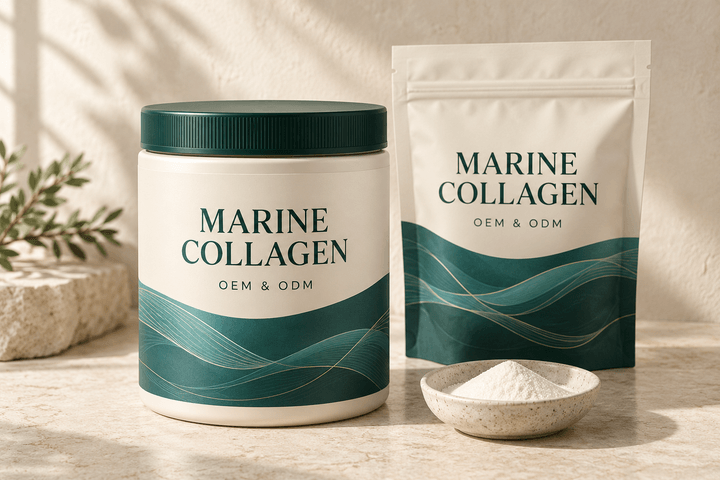
Start With the Marine Source
A marine collagen product brings source questions to the front of development. Buyers need to know what material is proposed, what the origin documents establish and how that source will be described on the pack. The consumer experience then needs equal attention: a premium presentation still depends on an acceptable aroma, finish and mixing routine.
HerbalExt supports private label marine collagen powder projects for beauty, wellness and nutrition portfolios. Build the brief around the selected fish-derived material, its intended application and the requirements of your market. Source documentation, sensory development and packaging should progress together, so the final product story matches the ingredient being purchased.
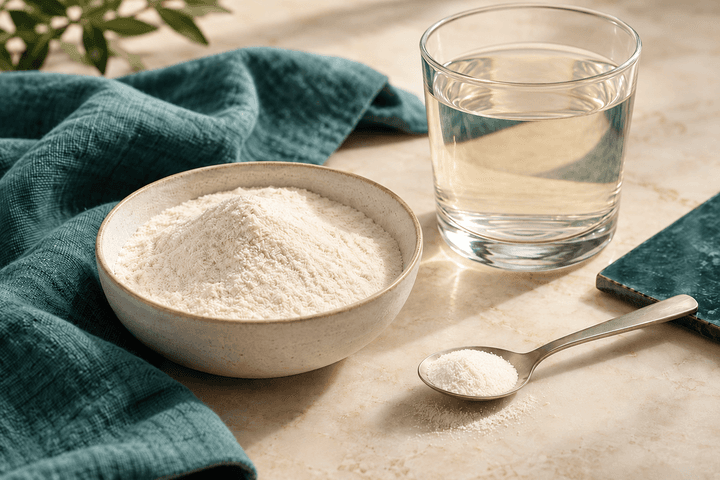
Marine Collagen Directions
The following routes are concepts for project discussion. Material availability, recipe feasibility and destination-market requirements are confirmed before a commercial offer.
Unflavored Marine Collagen
A focused ingredient presentation for customers who add the powder to their preferred drink or food. Compare background aroma and taste in each intended application. The specification and preparation instructions should support a clear, honest unflavored position.
Fruit-Style Collagen Drink
A citrus, berry or other fruit-led beverage direction with its own water volume and sensory target. Aroma management, acidity and lingering sweetness are developed around the fish-derived base. Color and appearance are part of sample approval.
Marine Collagen Blend
A formula that combines the selected collagen with separately reviewed ingredients. Keep the collagen contribution visible in the project brief and assess each addition for purpose, market eligibility, flavor impact and its share of the serving weight.
Individual Serving Range
A sachet concept for a measured powder portion, sold alone or in a carton. Review opening, powder release and how the customer will prepare a serving away from home. Film, carton and powder quantities affect the commercial plan separately.
Identify the Proposed Material
Fish Source Declaration
Request a source declaration covering the proposed fish material and relevant tissue information. Country of processing, fish origin and species information answer different questions. The documents should make their meaning clear enough to support purchasing, market review and any planned label statement.
Material Characterization
Where the brief calls for peptide characterization, define the analytical method and reporting basis with the supplier. Discuss identity, composition, moisture and physical criteria alongside molecular-weight information. A generic marine collagen brochure does not establish a batch specification, and a lower numerical molecular weight does not by itself demonstrate a superior finished product. Select the material against the requirements you can verify.
Read the Source Story Carefully
A source-led range needs specific supporting information. Separate facts about the ingredient from claims about how it was obtained.
| Question | Information to review |
|---|---|
| What is the animal source? | The proposed species information and tissue declaration, with the agreed ingredient name. |
| Where does it come from? | The origin and processing information relevant to the selected material and market. |
| What does traceable mean here? | The records and supply-chain stages covered by the proposed statement. |
| Is a sourcing claim supported? | The exact certificate, scope and permission needed for the claim being considered. |
| What must appear on the label? | Applicable source and allergen wording for the finished product and destination. |
No sustainability, wild-caught, religious or other source certification is asserted for an unspecified ingredient.
Collagen Contribution and Serving
Distinguish the collagen ingredient amount from the complete powder serving. An unflavored base, a sweetened fruit drink and a multi-ingredient blend can have different total weights even when the intended collagen contribution is the same. Set both figures before comparing pack economics.
Allow room for the sensory system and any additional ingredients. Then reconcile the proposed serving with the preparation volume, scoop or sachet and net contents. Bulk volume should be checked using the actual formula, since powder mass alone cannot tell you whether a portion fits a small sachet or whether a tub has usable headspace.
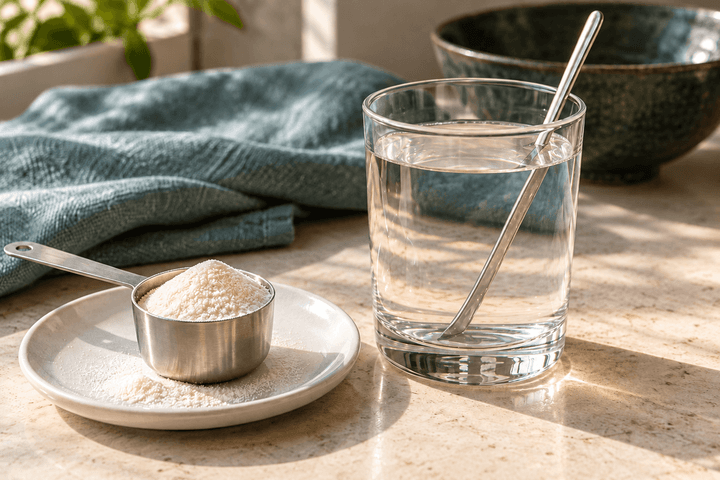
Aroma Before Artwork
Base Aroma & Finish
Assess marine collagen dry and after preparation. The intended drink may expose or soften a background note, and a pleasant first sip may finish differently after standing. Establish the sensory target in plain language: acceptable source aroma, flavor intensity, acidity, sweetness and the length of the aftertaste.
Flavor Balance
Fruit directions can be explored without assuming that stronger flavor is always the answer. Compare balanced options at the intended dilution. A lighter drink may reveal a base note that a richer beverage covers, while excessive acidity or sweetness can create a different rejection reason. Approval should identify the exact material and formula used, so a later source change triggers another sensory review.
Define the Preparation Experience
Preparation Method
Choose the drinks and preparation tools the customer is expected to use. A spoon-stirred glass, a shaker bottle and a blended smoothie create different conditions. Record water temperature, liquid amount, order of addition and mixing time in the sample method.
Appearance & Dispersion
Review wetting, persistent particles, foam and appearance after standing. If a clear-looking beverage is part of the concept, define what that appearance means and test it with the selected blend. Do not infer a universal solubility claim from a molecular-weight figure. The approval record should include the finished preparation, and label directions should reflect the method that was evaluated.
Protect the Powder Experience
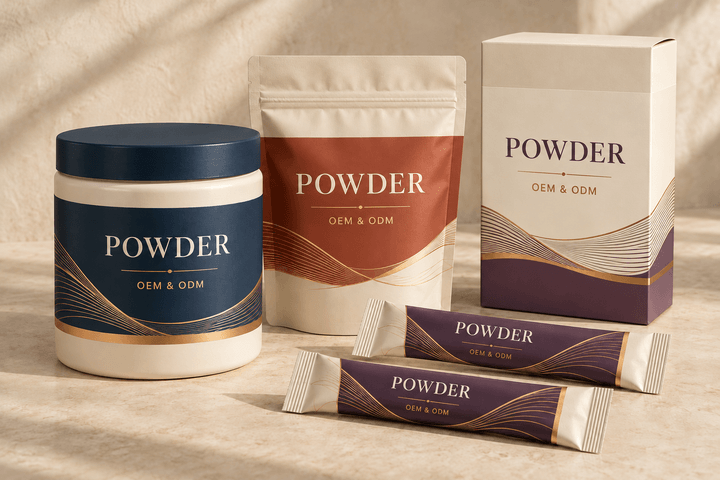
Discuss a pack structure that addresses the selected powder's moisture and storage requirements. For a tub, review closure access, headspace, seal integrity and repeated opening. For a pouch, consider closure operation and the user's ability to retrieve a measured serving without spilling powder.
Sachets give a defined portion but need their own filling and opening review. Include emptying performance, readable preparation instructions and the space needed for source and allergen information. A carton mockup is a visual concept until component specifications and production artwork are agreed. Confirm whether the chosen materials and seals are appropriate for the proposed shelf-life plan.
Develop With a Defined Scope
Formula & Product Direction
For OEM manufacturing, provide the formula, selected material requirements and the documents expected for your market. Review whether the specified ingredient can be sourced and whether the proposed pack is practical. A photograph or retail sample can describe the goal but cannot establish the complete recipe.
Project Scope
For ODM development, choose one source direction and one principal drink experience first. Flavor variants can follow after the base is acceptable. HerbalExt can discuss formula review, samples and branded packaging within an agreed project scope. Set responsibilities for source claims, formula approval and label review before the final commercial specification.
A Source-Specific Sample Plan
Keep the sample reference linked to the raw material being considered. Comparing flavors is only useful when changes to the collagen base are also recorded.
Review the source documents
Check the proposed ingredient identity and origin information against the brand's exclusions and destination-market needs.
Assess the unflavored base
Prepare the intended liquid and record aroma, background taste and appearance before selecting a masking direction.
Compare finished drinks
Evaluate agreed flavor and sweetener options at the intended dilution, including the finish after standing.
Approve serving and presentation
Confirm the recipe version, preparation method, proposed portion and pack brief. Record outstanding component or document decisions separately.
Carry the Source Through Production
Marine collagen development should preserve the connection between the approved material, finished formula and pack declarations.
Confirm incoming requirements
Agree the source documents, ingredient specification and applicable acceptance checks for the selected production material.
Freeze the formula
Identify the collagen contribution and every other ingredient, with approved alternatives only where the project permits them.
Review powder processing
Set the blending approach and relevant handling requirements for the actual recipe rather than assuming all marine collagen blends behave alike.
Coordinate filling and labels
Match net contents, portion format, seals and the current artwork version to the production plan.
Review release documents
Check the agreed testing and batch records against the project requirements before final shipment arrangements.
Tests for the Selected Source
A fish-derived material needs a quality plan tied to its identity and supply chain. Discuss the appropriate microbiological and contaminant criteria, analytical methods and acceptance limits for the destination. Relevant elements or other contaminants should be considered through the material and market risk assessment, rather than covered by an undefined purity claim.
Peptide information, protein-related data and source traceability are separate evidence categories. Request the documents needed for each. Finished blend checks may also include moisture, sensory appearance and packaging integrity. Confirm available reports and the basis for any shelf-life statement for the actual project. Concept imagery is not a batch certificate or an analytical result.

Fish Allergen and Label Review
Product Label
Fish-derived collagen requires specific allergen planning. For a United States label, FDA identifies fish as a major food allergen and requires the applicable fish species declaration. Review the exact wording for the selected material and product; a broad marine description is not a substitute for the required label details.
Positioning & Evidence
Check other ingredients and processing information before considering free-from claims. Animal origin also matters to portfolio positioning: fish collagen does not belong in a vegan range. Beauty or wellness naming does not establish a permitted benefit claim. Source-led language should remain within what the selected ingredient documents and the target market can support.
Quote the Complete Concept
MOQ is available on consultation. Send the proposed source criteria, collagen contribution, flavor direction, packaging, destination and order estimate. Ingredient documentation requirements and custom printed components can affect the commercial basis as much as the powder itself.
Confirm which analytical work, sample revisions and packaging steps are included in the offer. If a source-specific claim is essential, settle its evidence requirements before comparing prices. Sampling and production schedules are confirmed per project after material availability, formula work and component supply have been reviewed.
Marine Collagen FAQs
What does marine collagen mean for the ingredient specification?
The category name is a starting point. The proposed material needs an identified animal source, relevant tissue information and a supplier specification. For a fish-derived project, establish the fish species information required by the destination market. Confirm the actual source instead of relying on an ocean-themed product name.
Is fish collagen suitable for a vegan product range?
Fish-derived collagen is an animal ingredient and is not suitable for a vegan positioning. A plant-based drink concept belongs under a different ingredient and product brief. If your range has strict source exclusions, share them before material selection and sample development.
Does hydrolysis remove the need for allergen labeling?
Do not assume that hydrolysis removes allergen obligations. Review the selected fish-derived material and finished formula under the destination market's rules. For the United States, FDA identifies fish as a major food allergen and calls for fish species disclosure in applicable allergen labeling.
Can marine collagen powder be unflavored?
An unflavored recipe can be assessed, with a clear target for the prepared product. Evaluate aroma, background taste and appearance in the intended drink. Unflavored does not guarantee an odorless or tasteless ingredient, and a dry powder assessment alone cannot establish how it will perform in water.
Can citrus or berry flavors be developed?
Citrus, berry and other beverage directions can be discussed around the selected collagen base. Compare aroma balance, acidity, sweetness and the finish after standing. Flavor approval must use the complete recipe at the intended dilution, because a flavor concentrate in plain water does not represent the finished product.
What should a peptide specification include?
If molecular-weight information matters to the brief, establish the analytical method and whether the result describes an average or a distribution. Also identify the source, relevant composition and physical criteria. A low molecular-weight figure alone does not demonstrate a clinical benefit or settle the drink's sensory performance.
Can sustainable or traceable sourcing appear on the pack?
Discuss the exact claim and the documents needed before artwork begins. Traceability, country of origin, fish species and a sustainability certification are different pieces of information. Any claim must match the selected supply chain and applicable permissions; marine origin alone does not substantiate it.
Which formats and minimum quantities are available?
Tubs, resealable pouches and portion sachets can be reviewed. Format suitability depends on serving weight, powder volume, barrier requirements and component supply. MOQ is available on consultation, with the selected ingredient, formula, packaging and testing scope used as the quotation basis.
What information helps start a marine collagen project?
Share the destination market, source preferences, proposed collagen contribution, intended drink, flavor direction and pack concept. If an existing product is your reference, identify the features you want to match or change. Sample scope, sourcing documents and timing can then be discussed together.
Plan Your Marine Collagen Range
Share your source preferences, destination market, intended drink and packaging direction. We can use that brief to discuss the proposed material, sample evaluation and the commercial requirements for your private label marine collagen powder.