
Private Label Pre-Workout Powder Manufacturer
Develop a pre-workout powder with a deliberate ingredient stack, workable serving and coherent flavor. HerbalExt supports caffeine-free and caffeine-containing concepts with formula and market review, sensory sampling and branded OEM & ODM packaging for sports nutrition businesses.
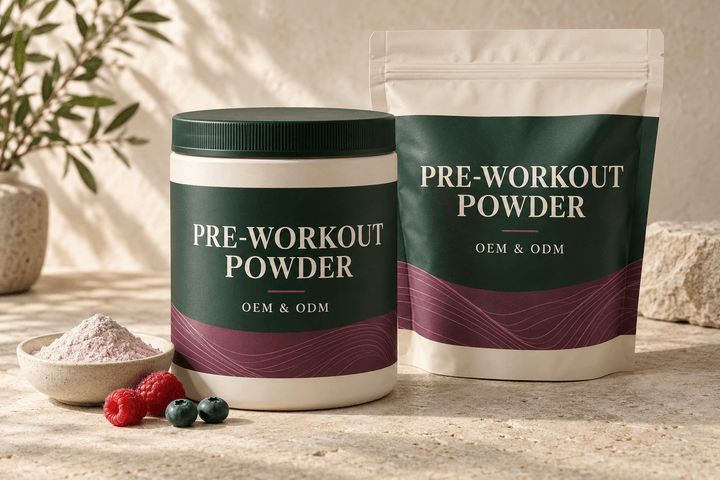
Build a Deliberate Formula
A pre-workout powder needs a clear product brief before the ingredient list grows. The chosen ingredients, their exact forms and amounts, the total serving weight and the caffeine position should describe one coherent product. These decisions shape bitterness, acidity, scoop size, powder handling and the information needed on the label.
HerbalExt supports private label development for sports nutrition brands, gyms, retailers and distributors. Formula review, sensory development, sampling, packaging and production planning can be scoped around a buyer formula or an ODM concept. Ingredient examples on this page are options for assessment. They do not represent a clinically tested combination, a ready-made formula or an approval for every destination market.
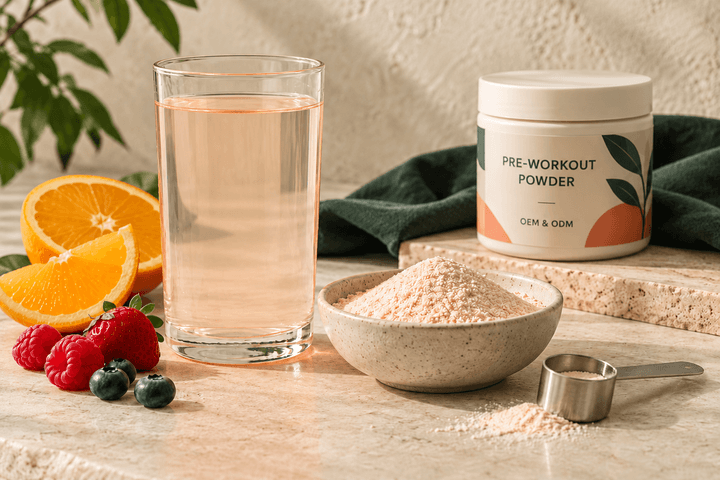
Pre-Workout Directions
Decide the caffeine position and range architecture first. Each direction needs its own formula, sensory profile and market assessment.
Caffeine-Free Concept
A formula developed without added caffeine, with selected non-caffeine ingredients and a clear serving structure. Review every material for incidental caffeine and other stimulant components before choosing caffeine-free or stimulant-free wording; those terms require separate support.
Caffeine-Containing Formula
A defined caffeine system with the total contribution from every source calculated and reviewed. The project needs clear serving information, suitable market-specific labeling and controls for ingredient distribution. A higher caffeine level is not a substitute for a better development brief.
Focused Ingredient Stack
A shorter list built around a small number of selected ingredients, with individual forms and amounts specified. This direction can help the brand explain the formula clearly and concentrate sampling on a manageable sensory target.
Broader Training Blend
A multi-ingredient concept that may include compatible amino acids, creatine or electrolytes where appropriate. Confirm the purpose, amount and market status of each addition, then review total scoop weight, taste, blend distribution and packaging feasibility.
Ingredient Stack Decisions
Use named ingredients and measurable specifications. Evidence about one ingredient does not establish the effects or safety of a new multi-ingredient combination.
Scroll to compare options
| Ingredient direction | Questions for the specification | Finished-formula review |
|---|---|---|
| Caffeine system | Source, assay and contribution from every caffeine-bearing material | Total caffeine, serving definition, distribution and market labeling |
| Citrulline options | L-citrulline or a defined citrulline-malate material; composition basis | Actual ingredient contribution, acidity and complete serving weight |
| Beta-alanine | Identity, assay and intended amount | Sensory experience, label wording and suitability for the project |
| Creatine or minerals | Selected form, assay and relevant composition | Scoop load, taste, handling and the formula's overall purpose |
| Botanical components | Botanical identity, part, extract specification and stimulant contribution | Market status, sensory load, contaminant requirements and claims |
The development brief specifies ingredients and amounts for technical review. It is not a consumer dosing recommendation.
The Complete Serving
List the proposed quantity of each ingredient, the specification on which that quantity is based and the total serving weight. A citrulline-malate material should not be treated as the same mass of pure L-citrulline. Botanical extract weight, mineral compound weight and the amount of a named constituent also answer different formulation questions.
The complete scoop includes flavors, acids, sweeteners, carriers and any flow aids. Check whether the desired ingredient load leaves enough room for a drinkable sensory system and a practical portion. Select the scoop using measured finished-powder density and verify the intended level measure. Artwork, serving count and net content should follow the same approved formula revision.
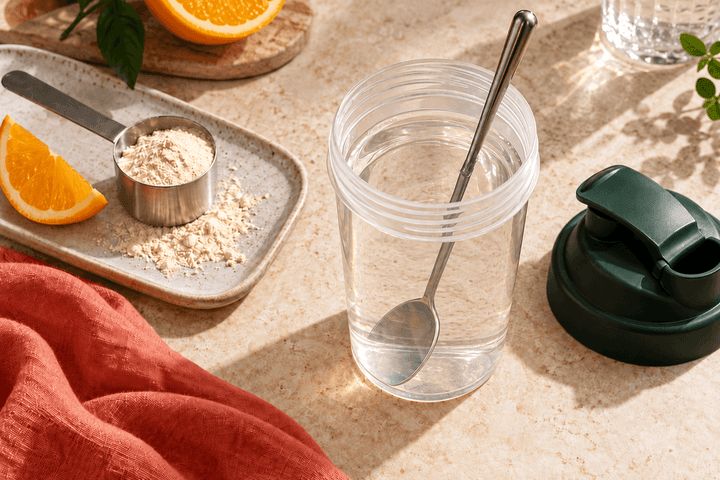
Caffeine and Market Review
Total Caffeine Review
For caffeine-containing concepts, calculate the total from direct caffeine and all other contributing materials. A plant-derived source still contributes caffeine. Confirm ingredient status, intended users, required statements and restrictions for the destination market before committing to the formula or artwork. Highly concentrated caffeine products raise specific regulatory and safety concerns and need a distinct assessment.
Caffeine-Related Claims
Caffeine-free and stimulant-free claims require a defined scope and supporting information. A formula without added caffeine could still contain another stimulant or an ingredient with naturally occurring caffeine. The brand should select precise wording after reviewing the actual materials. Consumer preparation instructions must align with the reviewed serving rather than encouraging variable or heaped scoops.
Flavor Under Load
Develop flavor with the final ingredient stack. A pleasant flavor base can change substantially when acids, minerals, caffeine or botanical materials are added.
Citrus Profiles
Set the balance of sharpness, sweetness and peel-like aroma. Review acid contribution from the entire formula before adding an acid system simply to reach a familiar citrus taste.
Berry and Fruit Profiles
Define recognizable fruit character and an acceptable finish. Compare sweetness and any bitter or mineral notes at the actual powder-to-water ratio.
Sweetener System
Evaluate permitted sweetener choices against the desired onset and aftertaste. Sugar-containing and high-intensity systems change serving weight and label composition in different ways.
Color and Appearance
Choose the intended color after seeing the complete ingredient base. Confirm color-source suitability for the market and assess changes during the planned preparation period.
Mixing and Drink Experience
Preparation Method
Approve a preparation method with measured powder, water volume, temperature and mixing time. Observe wetting, foam, settling, suspended particles and drink texture. Different components may disperse or settle differently, so a clear first sip does not describe the entire glass.
Sensory Feedback
The sensory brief should also distinguish flavor feedback from ingredient-related sensations. For example, beta-alanine can cause tingling; that sensation is not a measurement of product effectiveness. Any proposed inclusion needs an appropriate ingredient, safety and label review. Avoid using a sample tasting as a substitute for evaluating the complete formula and intended conditions of use.
Purposeful Packaging
Choose the pack after measuring serving weight, density and moisture sensitivity. The label needs enough space for a legible ingredient list, preparation instructions and any required statements.
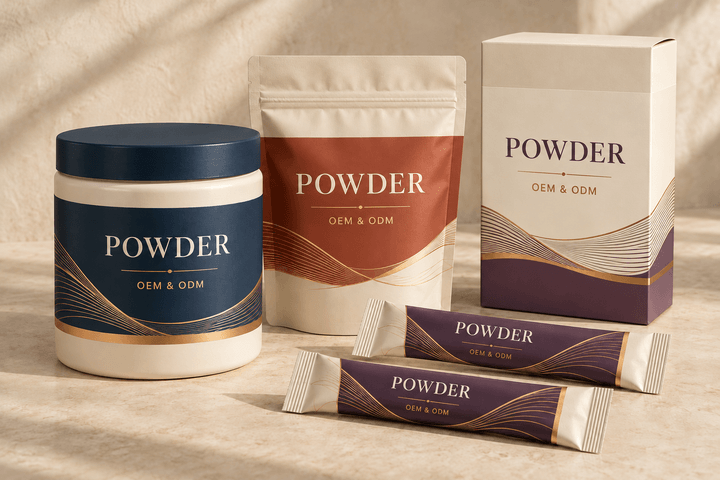
Multi-Serve Tubs
Align net content, serving count, scoop size and headspace. Check closure, seal and powder protection, as well as whether the intended scoop can be used consistently.
Resealable Pouches
Assess opening width, zipper cleanliness and scoop access with the actual powder. Consider handling and moisture exposure across repeated openings.
Single Portions
Review sachets or suitable stick formats where the serving and filling properties permit. Premeasured portions still require formulation, distribution and labeling controls; the format alone does not establish product safety.
OEM & ODM Scope
Formula & Product Direction
For OEM review, provide the complete formula with exact forms, amounts, source specifications and target market. A blend name or a competitor label often leaves important composition details missing. The review should identify these gaps before sensory or packaging work begins.
Project Scope
For ODM development, start with the caffeine position, intended product architecture and the attributes the brand can explain clearly. Formula feasibility, flavor work, packaging coordination and production planning can then be defined around those priorities. Changes to the ingredient stack should trigger a fresh look at serving weight, taste, testing and artwork rather than being treated as a small label edit.
Sample Development
Pre-workout sample approval should follow the technical review. Use named versions and a consistent preparation method for meaningful feedback.
Review the Stack
Confirm the proposed ingredient forms, quantities, total serving and caffeine contribution before setting the sample scope.
Develop Sensory Options
Compare a focused set of flavors or sweetener directions with the agreed ingredient load held constant.
Check Powder Behavior
Review mixing, residue, flow, density and portion measurement. Record any changes during the agreed standing or storage observation period.
Approve the Version
Link the selected sample to the formula, preparation method and pack plan. Resolve remaining market, testing and artwork questions before production planning.
Controlled Production Planning
A complex formula needs a production plan that addresses composition and consistency as well as flavor. Confirm the required controls and records for the selected product.
Qualify Materials
Agree ingredient identity, assay, composition and relevant source or contaminant documents for every material in the stack.
Lock the Formula
Confirm ingredient codes, quantities and the approved version. Review substitutions for their effect on caffeine contribution, market status and sensory performance.
Plan Ingredient Distribution
Assess the blending approach for low-inclusion ingredients and components with different particle or density characteristics. Define suitable uniformity checks where required.
Fill the Agreed Portion
Coordinate net weight, scoop or portion pack, seal, closure and coding with the formula's flow and moisture-protection needs.
Review Release Criteria
Agree finished-product checks and batch records, including any caffeine-content, composition or blend-consistency verification specified for the project.
Pre-Workout Specifications
Set a written acceptance basis for the formula and finished pack. A long ingredient list makes clear specifications more valuable, particularly where low-inclusion ingredients are involved.

Identity and Amounts
Define relevant ingredient and finished-product assays, analytical methods and tolerances. Specify how total caffeine or other key constituents will be assessed where applicable.
Blend and Physical Checks
Review ingredient distribution, moisture, flow, caking, scoop weight and sensory consistency using methods appropriate to the selected formula.
Safety Requirements
Agree applicable microbiological and contaminant checks, botanical-specific requirements and any additional controls for the destination market.
Package and Shelf Life
Assess seals, net content, storage conditions and the stability evidence needed for the finished formula. Moisture behavior and flavor stability belong in the pack review.
Labels and Sports Channels
Product Label
Keep the formula, ingredient declaration and serving instructions aligned. Product names such as caffeine-free or stimulant-free, claims about individual ingredients and any marketing language need review against the actual finished product and market rules. Avoid presenting a multi-ingredient formula as clinically proven because one component has published research.
Positioning & Evidence
If the sales channel requires independent prohibited-substance testing or a specific sports certification, define the program, scope and acceptance requirements early. These are separate project conditions and should not be inferred from ordinary ingredient documents, a laboratory-style image or a general sports-nutrition positioning statement.
Quote the Actual Formula
Compare commercial proposals using the same ingredient forms and amounts, complete serving weight, pack count and testing scope. A similar product name can conceal substantially different formulas. The number of flavors, custom packaging and required documents also affect the project.
Provide the destination market, proposed stack or preferred direction, caffeine position, packaging and estimated order quantity. MOQ is available on consultation. Material availability, sample scope, testing and lead time are confirmed after review. A focused first formula can establish the sensory and packaging direction before extending the range into additional variants.
Pre-Workout Powder FAQs
Can we develop a caffeine-free pre-workout?
A concept without added caffeine can be reviewed. The complete material list should be checked for naturally occurring caffeine and other stimulants before choosing caffeine-free or stimulant-free wording. Final composition and market suitability are confirmed during development.
How is total caffeine calculated in a blended formula?
Review direct caffeine and every contributing source, including caffeine-bearing botanical materials. Use the selected specifications to calculate the formula, then agree appropriate verification and label requirements. A natural-source description does not remove the caffeine contribution.
Are L-citrulline and citrulline malate interchangeable?
They need separate material specifications and formulation calculations. A citrulline-malate material has a defined composition that should be confirmed before calculating ingredient contribution. Switching material can change the serving, acidity and ingredient statement.
Does beta-alanine tingling demonstrate that a product works?
Tingling is a possible ingredient-related sensation and does not measure the effectiveness of the finished formula. Any proposed beta-alanine inclusion needs a review of the ingredient, intended amount, market requirements and appropriate labeling.
Can the formula include creatine or electrolytes?
Compatible ingredients can be evaluated as part of a defined stack. Confirm forms and amounts, complete serving weight, taste, mixing and market status. Each addition should have a clear purpose and be included in the production and quality specification.
Why does a sample sometimes cake or settle?
Moisture behavior, particle properties, ingredient interactions and preparation conditions can all be relevant. Review the actual formula, package and observations before identifying the cause. Caking and settling require product-specific acceptance criteria rather than a generic promise.
Is independent sports certification included?
No certification should be assumed. If a retailer or athlete-focused channel requires a named program or independent prohibited-substance testing, specify it early so availability, scope, cost and documentation can be reviewed separately.
What is needed to confirm MOQ and lead time?
Provide the full ingredient direction, caffeine position, market, flavors, package and estimated quantity, along with required testing. MOQ, sample work and production timing are confirmed for that combination of requirements after feasibility review.
Develop Your Pre-Workout Concept
Share the proposed stack or the product direction you want to build, together with the caffeine position and destination market. Add the serving, flavor priorities, package and estimated quantity for a focused feasibility and sample discussion.