
Private Label Super Greens Powder Manufacturer
Build a greens powder around a defined plant blend, a drink people enjoy and packaging that fits your range. Explore green blends, fruit-led flavors and smoothie formats with HerbalExt OEM & ODM project support.
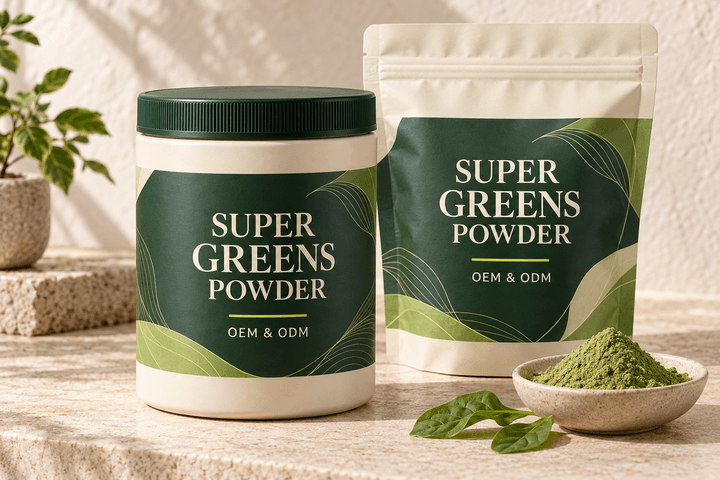
Super Greens Powder Development
A recognizable greens product starts with more than a long ingredient list. The amount of each plant ingredient, the preparation method and the intended drink all shape what customers see, taste and feel. Decide whether your product is a green drink, a fruit-flavored blend or a smoothie addition before adding more components.
HerbalExt supports formula review, sensory sampling and branded powder packaging for supplement brands, importers and private label ranges. Bring an existing specification or develop a new brief with us. The options below are starting points for development; the approved formula defines the finished product.
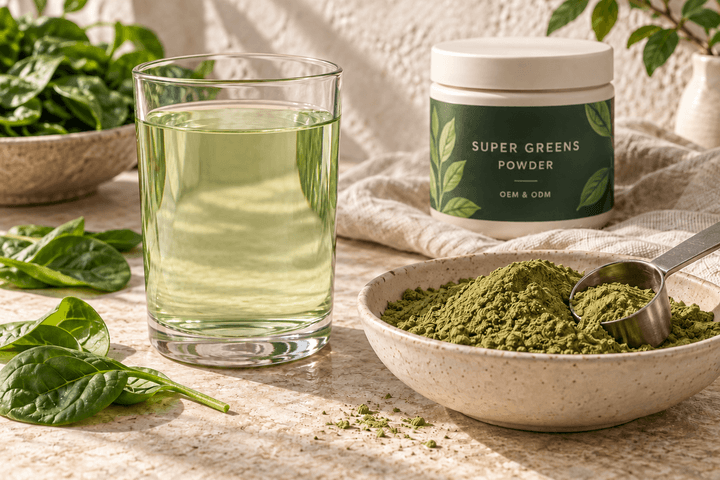
Product Options
Build the range around the plant experience you want to retain: a direct greens drink, a fruit-led beverage, a smoothie powder or a greens-and-nutrients blend.
Greens-first blend
A plant-led powder with a short, understandable ingredient story. Start with the greens you want to feature, then define how much natural color, earthy flavor and fine plant texture the drink should retain.
Fruit & greens drink mix
A fruit-led direction for brands seeking a more familiar beverage experience. Berry, apple or citrus flavors can be explored against the complete plant blend, with sweetness and acidity set at the intended dilution.
Smoothie blend
A powder designed for mixing into a thicker drink rather than disappearing in water. Develop the color and texture in the smoothie base customers will use, and agree whether the formula includes fruit powders or fiber.
Greens & Nutrients Blend
A plant base combined with separately specified vitamin or mineral ingredients. Define the amount and source of each addition and its contribution to the serving. Review mineral taste, color, mixing and the basis for any nutrient declaration in the complete recipe.
Ingredient Choices
The blend needs identifiable plant materials, not just a collective greens name. Leaf, grass and algae ingredients bring different colors, aromas and specification questions to development.
Leaf & vegetable powders
Specify the plant species, plant part and processing form for proposed ingredients such as spinach, kale or broccoli powder. Whole plant powders and extracts are different materials; define the actual ingredient rather than using a broad marketing name.
Grass powders
Barley grass or wheat grass concepts need clear source and harvest specifications. Any gluten-related positioning needs assessment of the supplied material, cross-contact controls and the finished product; a grass name alone does not establish a claim.
Algae options
Spirulina or chlorella may be considered as distinct source ingredients. Discuss identity, odor, color and contaminant specifications early. Their sensory contribution must be evaluated at the actual inclusion level.
Fruit, fiber & other additions
Fruit powders, fibers or selected nutrients can change the serving weight and beverage texture. Specify carriers and subingredients as well as the named ingredient, and add components for a clear product purpose rather than a longer front-label list.
Formula & Serving Design
Track how much of the serving comes from the plant blend and how much comes from fruit, flavor or other additions. Check the finished portion in its intended water or smoothie base.
Plant blend per serving
Set ingredient amounts before targeting the scoop. Two formulas with the same total serving weight can have very different plant content, color and taste. A named blend total should remain traceable to its underlying formula.
Water or smoothie preparation
Define the liquid, temperature and mixing method. A powder intended for a shaker with water has a different sensory target from one blended with fruit and a milk alternative.
Texture & powder density
Record visible particles, suspension and the feel of the prepared drink. Scoop volume depends on the finished powder density; approve the scoop against the weight instruction rather than treating a scoop as a universal measure.
Flavor Development
Use the actual greens blend when developing flavor. Its color, earthy notes and plant texture should be assessed alongside fruit aroma and sweetness at the intended dilution.
Citrus or green apple
Explore a crisp fruit profile that works with the natural green color. Compare acidity and sweetness together so the drink remains balanced at the intended water volume.
Berry or tropical fruit
Develop a fruit-led direction with the plant blend in place. Green pigments can change the appearance of a berry or tropical concept, so approve the actual drink instead of a color reference alone.
Unflavored plant blend
Retain a direct greens identity for smoothie or food use. Unflavored means no added flavor system; it does not mean the plant ingredients will be tasteless.
Mixing & Texture
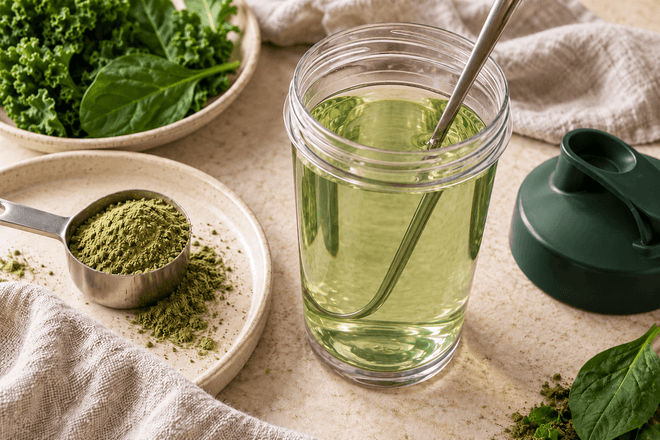
Plant powders do not necessarily dissolve into a clear beverage. Set a realistic target for dispersion, suspended particles and any settling rather than promising complete solubility. Compare the drink immediately after mixing and after the agreed standing period.
Use the same water quantity and preparation method for each sample version. Record clumps, foam, color transfer, mouthfeel and the need to shake again. These observations help distinguish a flavor issue from a change in particle size or the base plant blend.
Private Label Packaging
Plan the pack around a colorful plant powder that will be measured repeatedly. Review powder transfer, scoop access, closure cleanliness and readable instructions with the finished blend, then confirm moisture protection and usable fill volume.
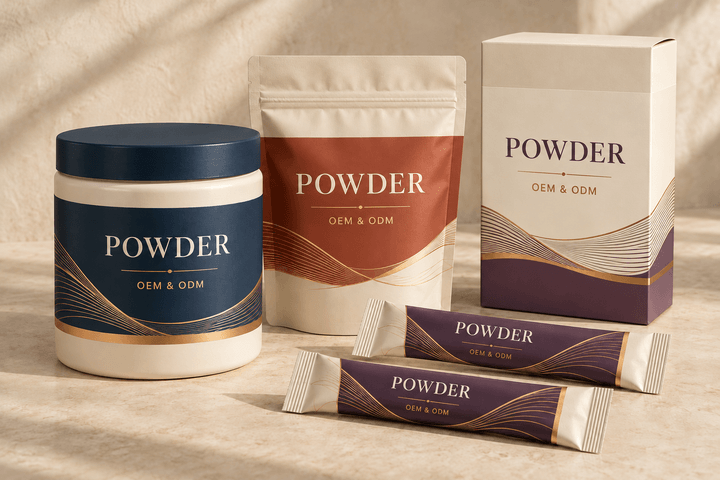
Tubs for a daily greens routine
Check scoop retrieval and headspace with the actual blend. Observe powder transfer around the neck and closure during ordinary use, and keep the preparation instructions visible when the tub is handled. Container size should follow measured powder volume.
Pouches for retail or refill
Review opening width, zipper operation and how the customer reaches a serving near the bottom. Include the chosen greens blend in pour and closure checks, because fine plant powders and compound ingredients can handle differently.
Sachets for measured greens
A portion pack can carry a defined plant serving, but film dimensions must fit the complete blend. Compare opening, emptying and the drink made with the stated water volume. Keep fruit or nutrient variants linked to their own formula.
Cartons and flavor assortments
Plan outer-pack quantities and clear variant identification for citrus, berry or other proposed flavors. Each sachet recipe needs a corresponding ingredient and preparation record. A shared carton design should still allow accurate information for the products it contains.
OEM & ODM Project Support
A greens project can start with a defined plant formula or a target drink experience. In either case, agree the source ingredients, intended plant contribution and permitted substitutions before flavor and packaging work are finalized.
OEM: a defined greens blend
Share plant species, parts, processing forms and the proportions you want to preserve. Include carriers in fruit or extract materials and the requirements for any nutrients. Identify whether the product is prepared in water or blended into a smoothie.
ODM: a plant-led range
Describe the greens character your brand wants: direct and earthy, fruit-led or fuller-textured. HerbalExt can discuss material selection and sensory sampling around that goal. Organic, vegan or gluten-related positioning needs its own supporting requirements before ingredient selection.
Sample Development
Evaluate the plant blend before multiplying flavors. Record color, earthy aroma, visible particles and mouthfeel in the same liquid so changes to greens and changes to the sensory system remain distinguishable.
Approve the plant blend and exclusions
List the named plants, plant parts and target amounts. Include any organic, vegan or gluten-related positioning for review before a sample is labeled that way.
Compare flavor at the intended dilution
Compare a focused set of versions using the same water or smoothie base. Record sweetness, earthy notes, acidity and color as separate observations.
Check settling, scoop and pack fit
Check dispersion, prepared-drink texture and the proposed serving method. Review the tub or sachet against the actual powder weight and density.
Lock the accepted formula and artwork
Connect the accepted sample to a versioned ingredient specification, mixing instruction and pack plan. Changes to the blend after approval may require another comparison.
Manufacturing Process
The production brief should retain the approved plant identities, proportions and carrier information. Any source or grade change needs review for its effect on the powder's color, aroma, texture and agreed analytical requirements.
Materials & specifications
Confirm the plant blend and sourcing specifications, including compound ingredients and their carriers.
Batch preparation
Identify materials and prepare the batch instructions against the approved formula and serving basis.
Blending & checks
Blend the specified ingredients and carry out the agreed in-process checks for the product.
Filling & retail packing
Fill the chosen format; verify net fill, printed artwork, closures and relevant pack checks.
Release & dispatch
Complete the agreed release documentation and prepare labeled cartons for the selected delivery terms.
Quality & Product Specifications
Define the identity approach for each plant source, the relevant contaminant methods and the finished blend's acceptance criteria. Include prepared-drink appearance and any declared nutrient requirements in the specification alongside net fill and packaging.

Botanical identity & sourcing
Agree ingredient names, plant parts, processing descriptions, source declarations and the identity approach appropriate to each material. A multi-plant blend needs a traceable ingredient specification before it becomes a finished powder.
Contaminant specification
Discuss relevant microbial, heavy-metal, pesticide and other risk-based requirements for the actual ingredient mix and destination market. Specify methods and acceptance limits with the testing plan rather than promising a generic certificate covers every issue.
Finished-product checks
Define appearance, flavor, net fill, moisture-related requirements and any declared nutrient tests. If live cultures or enzymes are proposed, establish the relevant specification and stability evidence for that particular addition; do not infer activity from the ingredient name.
MOQ & Quotation
MOQ is available on consultation for your greens blend and selected pack. The number of plant materials, sourcing requirements, added nutrients and quantity split between flavors can affect the commercial basis. A long plant list and a focused blend should be compared as different formulas.
Provide the intended plant contribution, preparation style, preferred flavors, destination and estimated quantity by format. Identify any organic or other claim requirement before quotation so sourcing and documentation can be assessed together. Confirm sample revisions, testing, printed components and timing in the proposal.
Super Greens Powder FAQs
Can you develop a greens powder without a complete formula?
Yes. Start with the type of drink, the plants you want to feature and a reference product if you have one. We can develop a formula brief for sampling, including serving weight, sensory targets and packaging.
Can I choose the greens and fruit ingredients?
Proposed ingredients can be reviewed for source, specification, availability and the intended market. Specify the plant part and ingredient form where possible. The final selection is recorded in the approved formula.
Will the powder dissolve completely in water?
That depends on the actual materials. Whole plant powders can remain suspended or settle. Define the acceptable dispersion and texture during sampling rather than assuming the finished drink will be clear.
Can you make a flavored or unsweetened greens blend?
Both directions can be discussed. An unsweetened formula still has the natural taste of its ingredients, while a flavored formula needs a compatible flavor and sweetener brief.
Can I request organic or gluten-free positioning?
Tell us the exact claim and destination market before sourcing. Relevant ingredient documentation, supply-chain controls and finished-product requirements need confirmation for the specific project.
Can the same blend be packed in tubs and sachets?
A multi-format project can be assessed. Serving weight, powder flow, fill capability and printed-pack quantities need review for each format, even when the ingredient formula is shared.
What determines the MOQ?
Formula size, selected ingredients, quantity per flavor and packaging components all matter. Contact us with the proposed pack and order split for the applicable MOQ.
How do we approve a greens sample?
Use a fixed preparation method and compare flavor, color, dispersion and mouthfeel. Keep version-specific feedback and connect the accepted sample to the final formula and packing specification.
What quality documents can we discuss?
Ask for the proposed ingredient specifications, source and allergen declarations, agreed testing plan and available batch documents. The document set is defined by the composition, claims and destination market.
Plan Your Super Greens Powder
Tell us which greens you want to feature and how the drink should taste and feel. Add the preparation style, nutrient additions if proposed, destination and pack concept so we can discuss the blend, samples and commercial scope.
Have a formula?
Send the ingredient specifications, serving basis and changes you want.
Starting with an idea?
Describe the product type, audience, preferred flavor and pack.