
Private Label Vegan Protein Powder Manufacturer
Create a plant protein powder around the right protein base, texture and flavor. HerbalExt supports pea, rice and blended plant-protein concepts with serving development, sensory sampling and OEM & ODM packaging for sports nutrition and everyday nutrition brands.
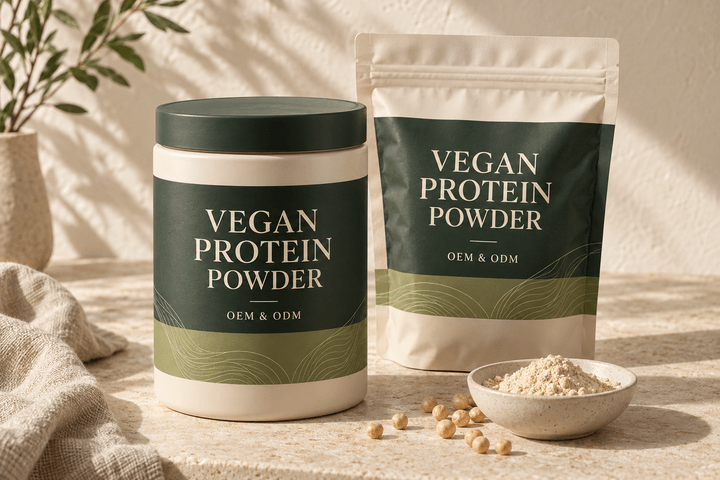
Start With the Plant Base
The protein base shapes a vegan powder long before a flavor name is selected. Two pea ingredients can behave differently in a shaker, and adding rice protein changes more than the ingredient statement. The project needs a defined protein target and a clear view of acceptable texture, aroma and thickness in the intended drink.
HerbalExt supports private label vegan protein powder development for plant-based brands, sports nutrition portfolios, retailers and distributors. Formula review, protein-source comparison, sensory development, sampling and packaging can be planned as one project. The ingredient and blend directions below are development options. Their availability, composition and suitability are reviewed before a commercial formula is agreed.
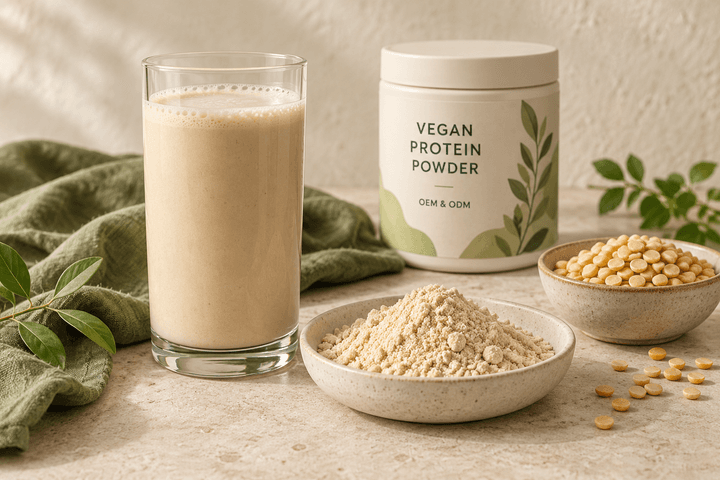
Plant Protein Directions
Choose a deliberate base and product experience. A simple protein shake, a thicker smoothie mix and an unflavored ingredient-style powder need different sensory standards.
Pea-Led Protein
A focused pea-protein direction with a defined material grade and protein target. Review raw-material aroma, bitterness, dryness and texture in the finished drink. A shorter source list can simplify the concept, while the actual grade still determines much of the drinking experience.
Pea and Rice Blend
A specified combination where blend proportions are chosen for composition and sensory goals. Assess protein contribution, mouthfeel and dispersion using the actual materials. An arbitrary blend ratio should not stand in for a reviewed amino-acid profile or a finished sample.
Soy-Based Concept
A plant-protein option for markets and brands that accept soy. Compare the selected isolate's composition, flavor and beverage behavior, with explicit soy-allergen planning. Availability and market suitability are part of the feasibility review.
Plant Protein Smoothie
A fuller-textured concept with selected cocoa, fruit, oat or other compatible ingredients where appropriate. Define the role of every addition and the complete nutrient profile. A protein smoothie should not be presented as a nutritionally complete meal without a separate formulation and market assessment.
Raw-Material Decisions
Plant origin alone does not predict functional performance. Compare selected grades and batches using a documented method, then qualify the material that supports the approved formula.
Scroll to compare options
| Decision | Material questions | Development consequence |
|---|---|---|
| Protein source | Pea, rice, soy or another permitted plant source; isolate or concentrate | Ingredient story, composition and source declarations |
| Protein specification | Assay basis, moisture and relevant amino-acid information | Protein calculation and any proposed nutrition claim |
| Physical properties | Particle characteristics, density and beverage behavior | Texture, mixing, scoop volume and pack selection |
| Complete ingredient system | Flavors, carriers, sweeteners, lecithin and optional additions | Vegan suitability, allergens and finished-product labeling |
A vegan description does not establish that a product is free from all allergens. Assess the exact formula, sources and manufacturing conditions.
Protein and Blend Design
Set the target protein per serving and calculate how much of each selected material is needed. A blend should record proportions and protein contribution on a consistent basis. Cocoa, fruit powders, fibers and other additions take space within the serving and change the overall composition. Raising total powder weight can also change thickness and the amount of liquid needed.
If amino-acid positioning is part of the brief, request appropriate composition data and review the complete formula and intended claim. Combining two plant names does not automatically establish a particular protein-quality score. The method and label basis should be agreed for the destination market. Serving and formulation targets discussed here are product-development parameters rather than consumer intake advice.
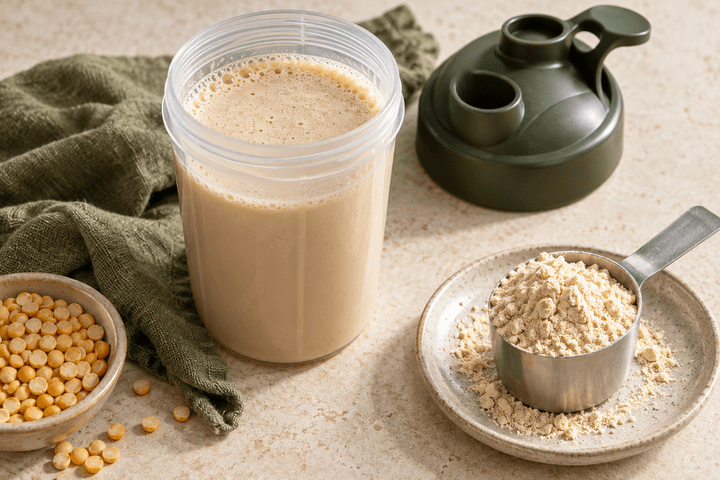
Texture Comes First
Target Texture
Describe the target in useful sensory terms: light or thick, smooth or visibly particulate, creamy or dry, with an agreed level of sediment. Commercial plant-protein materials vary in their sensory and functional properties, including between grades and batches. A powder that works in a blended smoothie may be less suitable for a simple water-and-shaker product.
Formula Adjustments
Compare the base at the intended protein load before using a strong flavor to cover it. Texture adjustments may involve material selection, blend proportion or a carefully chosen supporting ingredient. Each change affects the serving, ingredient declaration and drinking experience. Approve a realistic result instead of assuming a plant formula should behave exactly like whey.
Flavor and Sweetness
Flavor work should address the selected plant base and the intended liquid. Evaluate aroma, sweetness, bitterness and dryness together, including the finish after swallowing.
Cocoa and Roasted Profiles
Chocolate, coffee-style or roasted directions can create a coherent taste with some plant bases. Cocoa and other solids also affect color, thickness and sediment, so the whole drink needs review.
Vanilla and Cream Notes
Develop the desired vanilla intensity and body while checking the source of flavor components and carriers. A cream-style flavor name should not imply the presence or absence of dairy without a source review.
Fruit and Smoothie Profiles
Match fruit character to the actual base color, acidity and texture. Review separation and thickening over the intended preparation period rather than promising a clear fruit drink.
Unsweetened Options
A plain or unsweetened concept requires agreement on acceptable plant taste and intended use. No added sweetener, no added flavor and no added sugar are different specifications.
The Mixing Experience
Approval Method
Agree the liquid, temperature, powder weight and mixing method used to approve samples. Test water when the product is intended for water; plant beverages can change sweetness, body and perceived smoothness. A consumer using a shaker should be represented by a shaker test, even if blender use is also supported.
Mixing & Applications
Record wetting, floating powder, lumps, foam and residue. Check the drink after an agreed standing time because hydration and settling can change the experience. Preparation instructions should reflect the approved method. Spoon mixing, smoothies, oatmeal and baking are separate applications to evaluate when they appear in the intended positioning.
Vegan and Allergen Review
Whole-Formula Vegan Status
A vegan brief covers the whole ingredient system: protein materials, flavors, carriers, processing aids and optional additions. Request relevant source declarations and identify any independent certification requirement before artwork is finalized. A botanical main ingredient does not establish the status of every minor component.
Allergen Assessment
Allergen questions need their own assessment. Soy, wheat, nuts or other sources may be present in a formula or relevant to manufacturing cross-contact. Pea and rice should not be described as universally allergy-safe. Define any dairy-free, gluten-free or other free-from objective separately, with appropriate material information, controls and evidence for the destination market.
Packs for Plant Protein
Measure density and filling behavior before choosing pack dimensions. The same net weight can occupy different volumes with different plant bases or flavor systems.
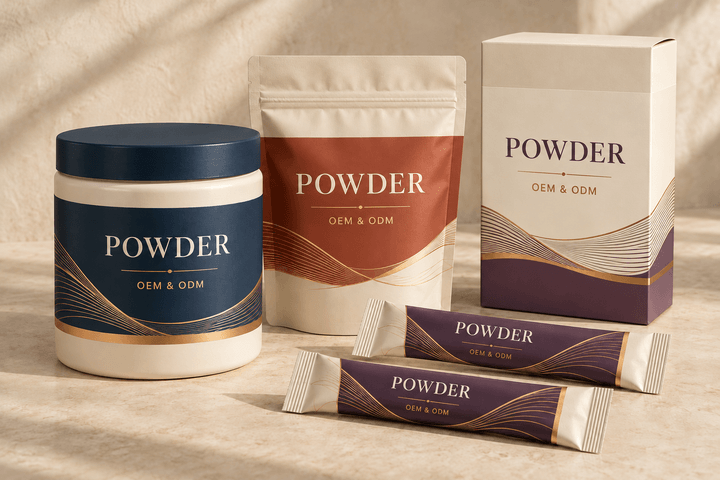
Scoop Tubs
Review fill volume, headspace, scoop access and closure. The pack should support the agreed number of servings and provide clear preparation and source information.
Resealable Pouches
Consider retail, refill or subscription formats with a suitable opening and zipper. Check powder protection and the practical handling of the proposed serving.
Trial and Portion Packs
Assess sachet fill weight, dimensions and opening experience for flavor discovery or portable use. Carton counts and labeling must align with the individual serving and sales format.
OEM & ODM Scope
Formula & Product Direction
An OEM brief can bring an existing formula and material specifications for review. An ODM project can begin with a chosen plant direction, protein target and sensory priorities. Identify which decisions are fixed and which can change; this helps compare materials without losing the intended product position.
Project Scope
Development can cover source and blend review, flavor and texture work, samples, packaging coordination and production planning. A reference product is useful for explaining thickness or sweetness, but its ingredient list is not a production specification. Agree the approved materials and formula version before proceeding to final artwork and commercial arrangements.
Plant Protein Sampling
Keep sample rounds focused. Changing the protein base, sweetener and preparation at the same time makes feedback difficult to interpret.
Compare Bases
Assess selected plant materials or blend proportions at an agreed protein load. Record the identity and version of each sample.
Set Texture
Choose the preferred body and acceptable particle feel using the intended liquid and shaker or blender method.
Refine Flavor
Compare aroma, sweetness and finish while holding the chosen base constant. Include any unsweetened direction as a distinct sample.
Check Pack Fit
Review density, scoop weight, net content and proposed package. Close remaining source-declaration and testing questions before approving the commercial version.
Manufacturing the Blend
The production brief should preserve the approved base and sensory profile while defining acceptable variation and relevant controls.
Qualify Plant Materials
Agree source, protein assay and relevant physical, microbiological and contaminant specifications for each selected material.
Confirm Ingredient Sources
Check the complete formula's vegan and allergen information, including lower-inclusion flavors, carriers and processing aids.
Control the Formula
Lock blend proportions and ingredient codes. Review any supplier or grade change for its effect on composition and sensory performance.
Blend and Pack
Plan ingredient distribution, powder handling, net weight, scoop or portion format, seals and batch coding for the selected package.
Review Release Criteria
Agree finished-product tests and documents, sensory comparison and any additional label-claim verification required before dispatch.
Plant Protein Specifications
A useful specification connects composition, sensory acceptance and safety requirements to the actual source materials and finished formula.

Protein and Composition
Agree protein methods and calculation basis, source identity and any amino-acid information required for the intended claims.
Sensory Consistency
Define appearance, aroma, moisture, mixing and texture criteria against the approved sample. Review material changes that could affect these attributes.
Market Safety Requirements
Set applicable microbiological and contaminant testing with suitable acceptance limits. Include source-specific considerations rather than assuming all plants have the same test needs.
Finished Pack
Confirm net-weight and seal checks, storage instructions and the evidence needed for shelf life. Any free-from or certification claim needs separate substantiation.
Quotation and Range Planning
Compare proposals on the same plant-source system, protein target, flavor and pack count. A lower container price may describe a different protein load, serving count or supporting ingredient system. Making those differences explicit helps the brand choose a product it can position clearly.
Share the destination market, intended channel, preferred sources, required source exclusions, flavors and opening quantity. MOQ is available on consultation. Material availability, sensory work, testing, packaging and lead time are reviewed per project. If several formats are planned, identify the core SKU first so the initial material and sample decisions remain manageable.
Vegan Protein FAQs
Can we choose pea protein, rice protein or a blend?
These directions can be reviewed against the protein target, sensory brief and market. Compare actual material specifications and samples. Blend proportions should reflect the intended composition and drinking experience, with availability confirmed during feasibility review.
Does a pea and rice blend automatically qualify as complete protein?
A blend name alone does not establish an amino-acid profile or a particular protein-quality score. Review suitable data for the actual materials, blend and serving, then assess the proposed wording under the rules of the destination market.
Can plant protein feel as smooth as whey?
Texture must be assessed with the actual materials, protein load, liquid and mixing method. Plant sources and grades differ. Define an achievable texture target through sampling rather than assuming the behavior of a whey formula will transfer directly.
Is a vegan product automatically allergen-free?
No. Vegan positioning addresses animal-derived inputs. Soy, wheat, nuts or other allergens may still be relevant to the formula or manufacturing. Review full source information and cross-contact conditions, and substantiate any separate free-from claim.
Can the powder be unsweetened and unflavored?
A plain direction can be assessed. Confirm whether the brief excludes added flavor, added sweetener, added sugar or all three, since these are different choices. The underlying plant aroma and texture should be included in sample acceptance.
Can the product be used in water and plant milk?
Both applications can be evaluated, but they can produce different sweetness and texture. Agree the primary preparation first, then review any additional suggested uses. Instructions and product descriptions should reflect the tested development conditions.
How is vegan suitability documented?
Review the source information for the complete ingredient system, including flavors, carriers and processing aids. If independent certification is required, specify that requirement early. Do not assume a certificate or a finished-product status from the protein source alone.
What determines MOQ and sample timing?
The plant materials, blend complexity, flavor rounds, packaging, testing and quantity affect the proposal. Provide the market and SKU plan for review. MOQ, available options and sample or production timing are confirmed for the project.
Shape Your Plant Protein Range
Share the preferred plant sources, protein target and texture you want the drink to have. Add flavors, source exclusions, packaging and the destination market to build a focused sample and quotation brief.