
Private Label Whey Protein Powder Manufacturer
Develop a whey protein powder with the protein source, flavor and drinking experience designed together. HerbalExt supports concentrate, isolate and blended concepts, custom sensory development, sampling and branded tubs, pouches or portion packs for B2B nutrition brands.
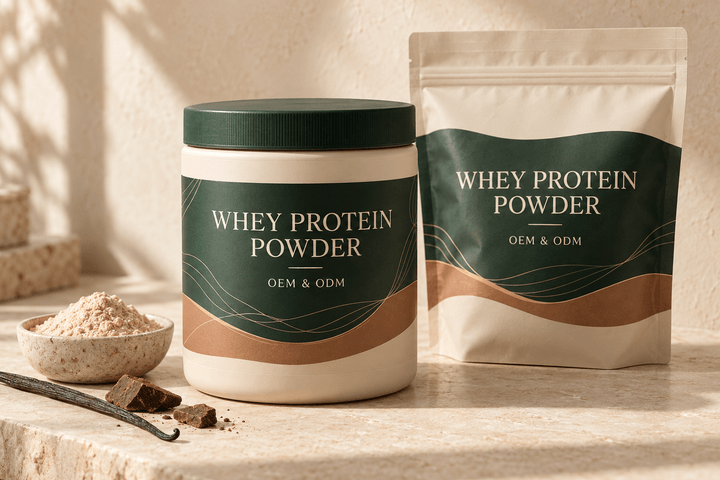
A Better Protein Brief
A whey protein project begins with the shake the brand wants to sell: a creamy chocolate drink, a lighter vanilla, a simple unflavored base or a specialized clear beverage. The whey source, protein target and preparation method then need to support that experience. Choosing the container or flavor name first leaves important formulation decisions unresolved.
HerbalExt supports private label whey protein powder development for sports nutrition, active-lifestyle retail, gyms and distributors. The project can connect ingredient selection, serving calculations, flavor and texture work, sample approval and commercial packaging. Concentrate, isolate and blend examples are options for feasibility review; specific materials, formula availability and finished-product claims require confirmation.
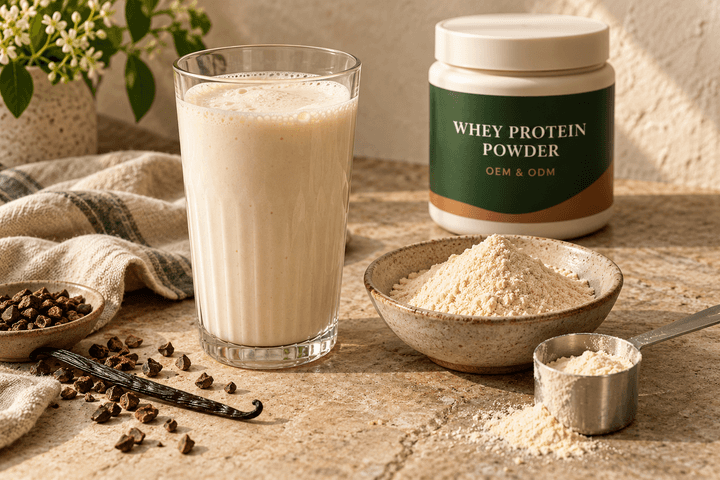
Whey Product Directions
Build the range around distinct product experiences. A clear drink and a creamy shake need different sample standards even when both use whey protein.
Concentrate-Based Shake
A WPC-led concept for chocolate, vanilla or other familiar shake flavors. Review the selected grade's protein, fat and lactose specifications alongside creaminess, serving weight and the target retail position. Concentrate is a material category, not a fixed finished-shake composition.
Isolate-Led Powder
A WPI-focused direction where the selected raw-material composition supports the intended protein target. Assess flavor body, sweetness and mixing with the actual isolate. Any low-lactose or other composition claim needs evidence for the complete finished formula.
WPC and WPI Blend
A defined combination for brands balancing ingredient composition, taste, body and commercial constraints. Record the blend proportions and the contribution of each protein material. Keep the front-label description consistent with the approved composition.
Clear Whey Concept
A fruit-style, lighter beverage direction requiring a suitable protein material and its own acidity, foam and clarity assessment. Review feasibility separately from a conventional milky shake; a standard vanilla formula cannot establish a clear-drink specification.
Protein Material Choices
The names WPC and WPI are starting points. The actual supplier specification should show composition, physical properties and suitability for the intended drink. Compare materials on the same analytical basis.
Scroll to compare options
| Choice | Review at material level | Confirm in the finished powder |
|---|---|---|
| Whey concentrate | Protein, lactose, fat, moisture and flavor characteristics | Protein per serving, texture and complete nutrient profile |
| Whey isolate | Protein assay, residual components and beverage suitability | Flavor body, dispersion and any composition claim |
| Instantized grade | Treatment, particle properties and lecithin source where used | Wetting, mixing behavior and full ingredient declaration |
| Hydrolyzed or specialized grade | Material identity, processing specification and intended application | Sensory acceptability, labeling and commercial feasibility |
Whey is milk-derived. Isolate, hydrolyzed and clear-style descriptions do not remove the need to assess milk allergen labeling.
Protein and Serving Weight
Separate the target grams of protein from the grams of powder in a serving. Cocoa, flavors, sweeteners, creamers and other additions contribute to powder weight and can change the nutrient profile. A protein raw-material percentage is not the protein percentage of the complete flavored product.
Calculate the formula from the selected material specifications, then agree an appropriate verification approach for the label. Review scoop weight, number of scoops, preparation volume and servings per pack together. Larger protein targets can require a larger serving or different material balance; the formulation should remain practical to scoop, fill and drink. No consumer intake recommendation is implied by these development decisions.
Flavor With Body
Approve flavor in the complete shake at the intended dilution. Whey grade, cocoa type, sweetness and texture can change how the same flavor system is perceived.
Chocolate
Define cocoa intensity, sweetness and the desired finish: light milk-chocolate, darker cocoa or dessert-style. Cocoa adds solids and can contribute visible sediment, so color and mouthfeel belong in the sample review.
Vanilla and Cream Profiles
Set the balance of vanilla aroma, dairy character and thickness. Compare the shake in water first when water is the labeled preparation; milk can hide differences between candidate formulas.
Fruit and Clear Profiles
Review fruit identity, acid balance and color with the proposed protein grade. For clear-style products, assess foam collapse and final appearance after the agreed preparation period.
Unflavored or Less Sweet
Define what the brand means by unflavored, unsweetened or reduced sweetness. Those descriptions address different formula choices and should not be used interchangeably on artwork.
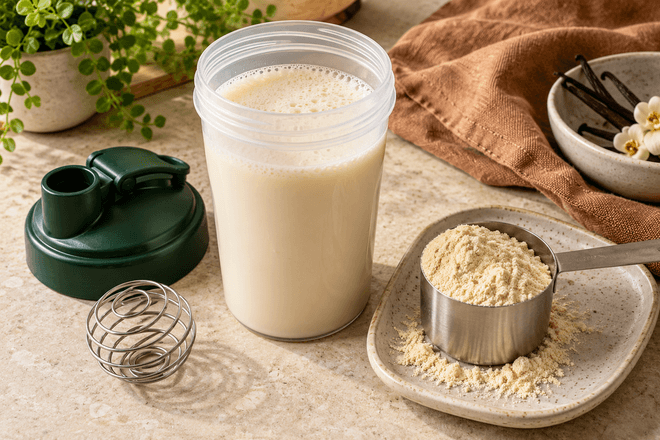
Shaker Performance
Shaker Approval Method
Use a repeatable shaker method for sample approval: measured powder, named liquid, temperature, mixing time and standing time. Observe floating dry powder, lumps, foam, residue and the texture of the drink. A blender can make a difficult powder look acceptable while concealing the experience of a consumer using a basic shaker.
Material & Application Review
Instantization or lecithination can be reviewed where relevant to the material, but the finished mix still needs evaluation. Record whether lecithin is present and its source. If the label also suggests smoothies, oatmeal or baking, test those applications separately before making performance promises; a successful cold-water shake does not confirm behavior in every food or heated drink.
Milk and Allergen Review
Whole-Formula Allergen Review
The allergen review starts with milk-derived whey and extends to the whole formula. Soy-derived lecithin, cookie pieces, nut flavor components or other inclusions can add source and declaration questions. Obtain the actual component information rather than relying on a flavor name or a general protein specification.
Lactose & Milk Allergy
Lactose content and milk allergy are separate issues. A low residual lactose result does not remove milk proteins or establish suitability for a person with milk allergy. Any lactose-related positioning needs a clear finished-product specification and market review. Cross-contact statements should follow the actual manufacturing assessment, with any independent certification requirement defined as a separate project condition.
Whey Packaging Options
Match the pack to the actual bulk density, serving count and distribution route. Protein powder packs need room for practical scooping without creating a misleading impression of the fill.
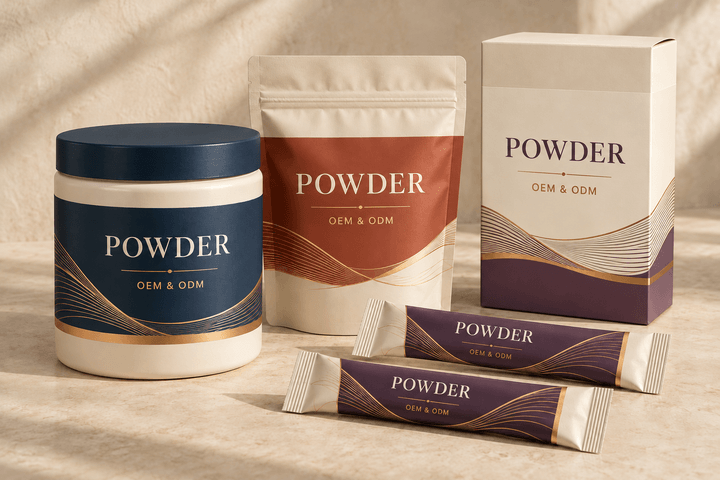
Retail Tubs
Review net weight, fill volume, headspace, scoop length and closure. Check the readability of the preparation instructions and allergen information at the intended label size.
Resealable Pouches
Plan an opening wide enough for the scoop, a usable zipper and suitable powder protection. Refill and e-commerce formats should also account for handling and carton protection.
Single-Serve Sachets
Useful for sampling, flavor assortments or portable servings where fill weight permits. Confirm sachet dimensions, opening experience and outer-carton labeling with the actual powder.
OEM & ODM Development
Formula & Product Direction
An OEM project can begin with a buyer formula and defined protein materials for feasibility review. An ODM brief can start with the desired shake, protein target, ingredient preferences and pack position. In both cases, identify which attributes are essential before comparing candidate materials or sweeteners.
Project Scope
A focused initial range makes sensory decisions easier: for example, one protein base with two carefully developed flavors, or two deliberately different bases with a shared brand identity. Formula review, sampling and packaging coordination can be scoped together. Artwork should follow the final formula and nutrition review so a late change in cocoa, creamer or protein source does not leave the label out of step.
Sample Approval
Evaluate whey samples in a sequence that separates protein-base decisions from flavor refinements. Keep the preparation and scorecard consistent.
Choose the Base
Compare the proposed concentrate, isolate or blend at the agreed powder load. Record the material and formula version for every sample.
Refine Flavor
Review sweetness, aroma, dairy or cocoa balance and aftertaste. Use water or the actual labeled liquid rather than changing the preparation to improve a sample.
Review the Drink
Measure mixing behavior, foam, thickness and settling at defined intervals. Include the proposed scoop and preparation instructions in the assessment.
Confirm the Pack
Check powder density, fill volume and portion weight, then approve the formula version before final nutrition, artwork and commercial specifications are completed.
From Formula to Pack
The manufacturing plan should preserve the agreed protein source, sensory profile and label basis. Confirm the product-specific controls before scheduling.
Review Incoming Materials
Align whey and flavor-component specifications, source declarations and relevant acceptance checks with the approved formula.
Lock the Formula
Confirm material codes, quantities and revision. Define how a change in whey grade, cocoa or sweetener triggers review.
Plan Blending
Address distribution of lower-inclusion ingredients, powder handling and any inclusions that affect consistency or segregation.
Coordinate Filling
Set net content, container volume, scoop insertion, closure, seal and batch coding requirements for the selected retail format.
Confirm Release Scope
Agree finished-product checks, documentation and retention arrangements, including any required nutrient or allergen-related verification.
Protein Quality Checks
Define what is checked, by which method and against which limit. The protein number, sensory profile and microbiological requirements are separate parts of the specification.

Composition
Agree protein measurement and calculation basis, relevant nutrient values and any amino-acid-profile review needed for claims. Added free amino acids, if proposed, must be disclosed and evaluated explicitly.
Physical and Sensory
Set appearance, odor, moisture, dispersion and drink-texture criteria that represent the approved sample under the agreed conditions.
Safety Requirements
Define applicable microbiological, contaminant and allergen controls for the materials, finished product and destination market.
Pack and Stability
Review net weight, seals, storage conditions and the evidence needed for a finished-product shelf life in the selected pack.
Commercial Planning
Compare quotations using a common protein source, protein target, net content and flavor system. A lower price per container can reflect a smaller serving count, a different whey grade or a different finished composition. Those differences should be visible in the brief before a price comparison is made.
Provide the destination market, planned channels, first-order estimate, flavors and preferred pack. MOQ is available on consultation. Ingredient availability, sample work, test scope, packaging requirements and production lead time are confirmed per project. A staged range can be discussed where several flavors or different pack sizes would otherwise divide the opening order.
Whey Protein FAQs
How do we choose between WPC, WPI and a blend?
Start with the target protein amount, intended shake texture, composition requirements and commercial position. Compare the actual material specifications and finished samples. The category name alone does not describe every grade or predict the flavor of the final product.
Is whey isolate a dairy-free ingredient?
No. Whey isolate is derived from milk and requires the relevant milk-allergen review. A lower lactose specification addresses a different compositional question and does not make whey suitable for a dairy-free or vegan product.
Can an isolate formula carry a lactose-free claim?
That claim requires review of the selected isolate, all other ingredients, the complete finished-product specification and the rules of the destination market. It should not be inferred from the word isolate or from a raw-material description alone.
Can we develop a clear whey powder?
A clear-style beverage can be assessed as a separate development direction using a suitable protein material. Acidity, flavor, foam, appearance and preparation conditions need dedicated sampling. Feasibility is confirmed before treating it as an available formula.
Why can two flavors have different serving weights?
Cocoa, flavors, creamers and other additions contribute different amounts of solids. To maintain a defined protein target, the complete serving may need adjustment. Each flavor should have its own verified formula, scoop plan and nutrition basis.
Can the powder be instantized or include lecithin?
Relevant material options can be reviewed for wetting and mixing. Confirm the processing specification and the source of any lecithin, then assess the finished shake. Ingredient and allergen declarations must reflect the selected material and complete formula.
Which packaging formats can be considered?
Tubs, resealable pouches and suitable single-serve sachets can be reviewed. The actual powder density, serving size, net content, scoop access and filling requirements determine the practical format. Packaging feasibility is confirmed alongside the formula.
What information is needed for a quotation?
Provide the whey direction, protein target, flavor list, pack size, estimated quantity and destination market. Include any required testing or documentation. MOQ, sample scope and lead time are confirmed after reviewing that combination of requirements.
Develop Your Whey Range
Share the shake style, protein target and first flavor priorities. Add the market and pack direction so material selection, sample comparisons and commercial planning can move forward on the same basis.