
Biotin Drops
Develop private label Biotin Drops with custom strength, serving-volume planning, flavor and liquid-base review, branded dropper bottles and OEM/ODM manufacturing support for B2B beauty and wellness brands.

Plan Your Finished Liquid Product
Start with your product concept and target market, then review ingredient, strength, base and serving-device choices together.
- Material
- Identify the biotin ingredient or premix, its potency and carriers. List any companion ingredients individually.
- Amount per mL
- Keep biotin contribution per mL distinct from total premix addition. Record the intended serving volume and finished-test basis.
- Carrier and behavior
- Review low-addition distribution, the complete liquid base and any flavor or sweetness adjustment at the proposed strength.
- Serving device
- Assess repeat delivery with the selected marked device and finished liquid. Keep serving volume and bottle fill on separate specifications.
Define the Actual Ingredient Preparation
Biotin liquid projects are typically driven by target strength per serving, dropper volume and the broader positioning of the finished beauty or wellness product.
Biotin Strength
Define the target biotin amount per serving and applicable ingredient specification before liquid-base design.
Serving Volume
Align the intended dropper serving with bottle size, usage instructions and commercial fill volume.
Blend & Sensory Direction
Review whether biotin is standalone or part of a beauty-support blend and whether flavor adjustment is required.
Review the Base Before Expecting a Clear Liquid
The complete preparation determines what can be assessed in the proposed carrier.
Solution or dispersion
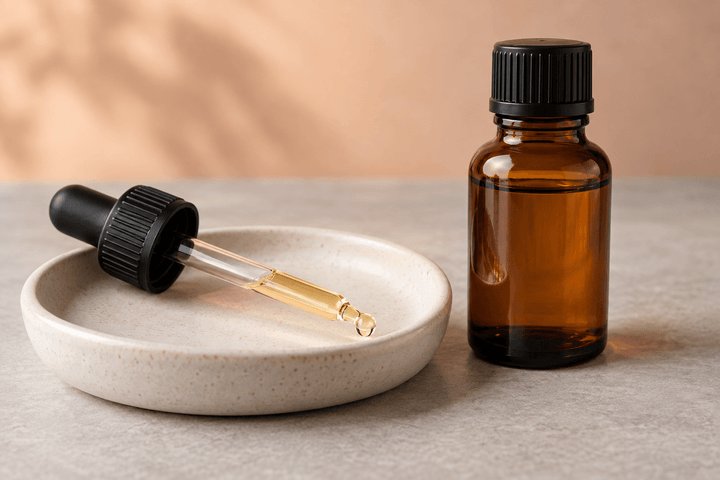
Record whether the proposed liquid is a solution or a dispersion. Assess clarity, particles, settling and any redispersion requirements with the selected ingredient and concentration.
Complete base composition
Identify the intended water, glycerin, oil or other carrier and all additional ingredients. Review any alcohol-free, flavor or sweetness request against the actual composition and market.
Connect Concentration to a Measured Serving
Bottle volume, mL per serving and drop count describe different things.
| Define | What to review |
|---|---|
| Concentration basis | Record ingredient, extract or constituent amount per mL with its material and analytical basis. Keep this separate from the total bottle content. |
| Serving volume | State the intended volume and assess a suitable marked device. Check repeat delivery with the actual liquid, viscosity, closure and bottle. |
| Drop-count wording | If drop-count instructions are proposed, verify them with the selected liquid and dropper. Do not assume an unmeasured drop count is equivalent to a marked volume. |
Review the Bottle, Closure and Filled Product
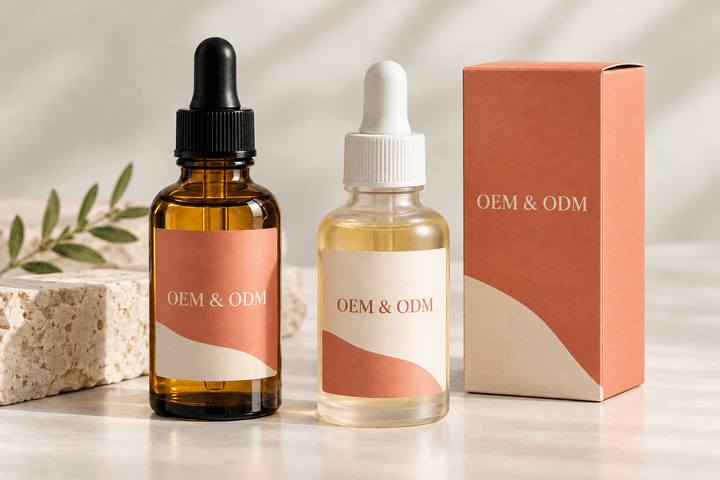
Review the filled bottle, dropper fit and closure. Keep any standalone or combination formula linked to the packaging and label brief.
Decide What the Trial Needs to Establish
Market and formulation review come before a sampling or manufacturing commitment.
Review the brief and proposed use
Share your product concept, target market, desired strength and bottle preferences. Any existing formula or ingredient specification can help the review, but is optional.
Assess the liquid trial
Where a trial is supported, compare distribution, appearance, taste and device delivery. Use the recorded premix potency when checking the proposed strength.
Check the packed reference
Review the finished liquid in the selected bottle and closure. Record device delivery, leakage, handling and the agreed storage observations with relevant content or quality measurements.
Confirm the records
Request biotin or premix potency, composition and source records. Agree the relevant finished-content and filling checks for the selected formulation.
Discuss Your Liquid Product Requirements
Bring your concept and any preferences already decided; ingredient, strength, device and packaging details can be developed during the review.
HerbalExt can review the proposed project and the information still needed. Feasibility, material availability, sample scope, minimum order and scheduling are discussed for the agreed formula and destination.
- Material
- Preferred ingredients and any existing formula or ingredient specification, if available.
- Liquid target
- Desired strength, serving and taste preferences, with any base requirements already decided.
- Commercial unit
- Bottle, closure, device, destination, quantity estimate and selected tests.
Biotin Drops FAQs
Can the strength of Biotin Drops be customized?
The target amount per serving can be reviewed against ingredient specification, serving volume, bottle size and destination-market requirements.
Can Biotin Drops be part of a multi-ingredient beauty formula?
Multi-ingredient concepts can be reviewed where compatibility, stability, serving size and market requirements support the formula direction.
Can flavored Biotin Drops be developed?
Flavor and sweetness can be reviewed around the liquid base and overall formula where the project requires a more consumer-friendly sensory profile.
What bottle sizes are available for private label Biotin Drops?
Commercial bottle and dropper sizes can be reviewed based on serving volume, servings per bottle, formula compatibility and project quantity.


Discuss the Liquid You Want Reviewed
Share your liquid product concept, target market and bottle preferences to identify the formula and packaging decisions to review next.