
Vitamin B Complex Drops
Develop private label Vitamin B Complex Drops with vitamin-form selection, custom strength and serving design, flavor and color review, branded dropper packaging and B2B OEM/ODM liquid supplement manufacturing support.

Plan Your Finished Liquid Product
Start with your product concept and target market, then review ingredient, strength, base and serving-device choices together.
- Material
- List each B vitamin, its selected form, potency and preparation. Record premix carriers and any other proposed ingredients individually.
- Amount per mL
- State each vitamin contribution per mL and the intended serving volume. Keep vitamin amounts, units and total premix addition separately traceable.
- Carrier and behavior
- Review pH, distribution, taste, color and ingredient interactions in the complete base. Assess the blend rather than assuming all B-vitamin forms behave alike.
- Serving device
- Check repeat marked-volume delivery with the complete vitamin liquid and chosen device. Keep the serving calculation linked to the individual vitamin specifications.
Define the Actual Ingredient Preparation
B-complex liquid products require careful selection of individual vitamin forms and target strengths because solubility, taste, color and stability vary across the B-vitamin family.
Vitamin Forms & Potencies
Confirm the source and target amount for each B vitamin together with supplier specifications and documentation.
Liquid Stability & Color
Review pH, ingredient interactions, natural color changes and shelf-life considerations for the combined formula.
Flavor & Serving Design
Align serving volume, taste management and bottle size with the intended daily-use concept.
Review the Base Before Expecting a Clear Liquid
The complete preparation determines what can be assessed in the proposed carrier.
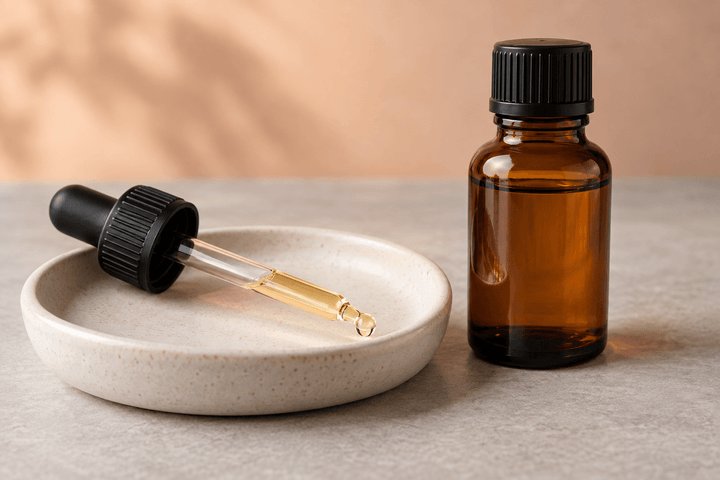
Solution or dispersion
Record whether the proposed liquid is a solution or a dispersion. Assess clarity, particles, settling and any redispersion requirements with the selected ingredient and concentration.
Complete base composition
Identify the intended water, glycerin, oil or other carrier and all additional ingredients. Review any alcohol-free, flavor or sweetness request against the actual composition and market.
Connect Concentration to a Measured Serving
Bottle volume, mL per serving and drop count describe different things.
| Define | What to review |
|---|---|
| Concentration basis | Record ingredient, extract or constituent amount per mL with its material and analytical basis. Keep this separate from the total bottle content. |
| Serving volume | State the intended volume and assess a suitable marked device. Check repeat delivery with the actual liquid, viscosity, closure and bottle. |
| Drop-count wording | If drop-count instructions are proposed, verify them with the selected liquid and dropper. Do not assume an unmeasured drop count is equivalent to a marked volume. |
Review the Bottle, Closure and Filled Product
Compare bottle, closure and protection requirements with the complete blend. Include relevant vitamin-content and sensory observations in the packed-storage review.
Decide What the Trial Needs to Establish
Market and formulation review come before a sampling or manufacturing commitment.
Review the brief and proposed use
Share your product concept, target market, desired strength and bottle preferences. Any existing formula or ingredient specification can help the review, but is optional.
Assess the liquid trial
If a trial is supported, compare taste, color, physical consistency and device delivery. Agree relevant individual-vitamin content checks alongside visual acceptance.
Check the packed reference
Review the finished liquid in the selected bottle and closure. Record device delivery, leakage, handling and the agreed storage observations with relevant content or quality measurements.
Confirm the records
Request each vitamin or premix identity, potency and composition record. Agree relevant individual methods, reporting units and finished-blend storage measurements.
Discuss Your Liquid Product Requirements
Bring your concept and any preferences already decided; ingredient, strength, device and packaging details can be developed during the review.
HerbalExt can review the proposed project and the information still needed. Feasibility, material availability, sample scope, minimum order and scheduling are discussed for the agreed formula and destination.
- Material
- Preferred ingredients and any existing formula or ingredient specification, if available.
- Liquid target
- Desired strength, serving and taste preferences, with any base requirements already decided.
- Commercial unit
- Bottle, closure, device, destination, quantity estimate and selected tests.
Vitamin B Complex Drops FAQs
Can the individual B-vitamin strengths be customized?
Each vitamin form and target amount can be reviewed against serving volume, stability, sensory profile and destination-market requirements.
Can methylated B-vitamin forms be reviewed?
Specific vitamin forms can be reviewed when the raw-material specifications and destination-market requirements support the proposed formula.
Why can B Complex Drops have a strong taste or color?
Several B vitamins have characteristic sensory and color properties, so flavor, sweetness, pH and ingredient interactions should be evaluated during formulation.
Can Vitamin B Complex Drops be supplied in branded dropper bottles?
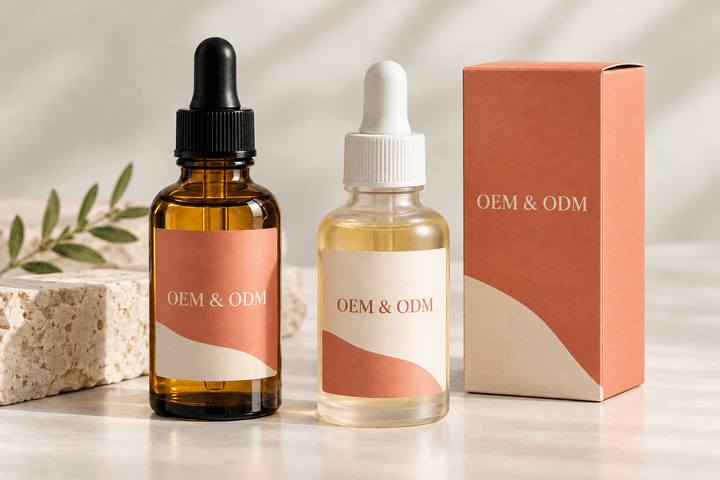
Bottle, dropper, label and secondary packaging can be coordinated around the approved formula, serving size and commercial quantity.
What should be recorded when a serving device is approved?
Record the selected bottle and device, serving volume and concentration basis for each vitamin. Ask how that volume is checked for the actual liquid and how it will appear in the artwork. Do not assume a universal number of drops per millilitre when comparing concepts.


Discuss the Liquid You Want Reviewed
Share your liquid product concept, target market and bottle preferences to identify the formula and packaging decisions to review next.