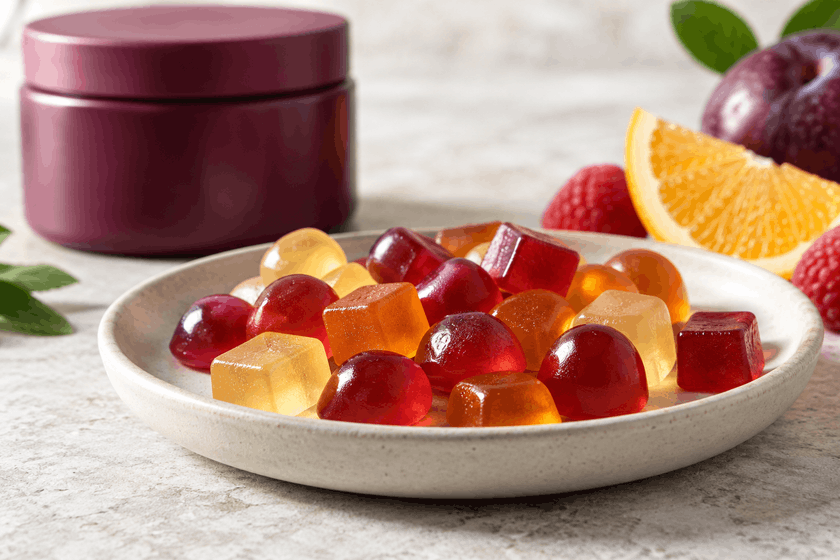
Gummy vitamins are made by preparing a gel-forming base, incorporating the supplement ingredients, depositing the mixture into molds, setting the pieces, and checking and packaging the finished product. That outline hides the decisions that matter to a supplement brand: which ingredients the gummy can carry, how the sample will be judged, and what must remain consistent when production increases.
A fruit-flavored sample is not yet a manufacturing specification. To move from an attractive concept to a repeatable product, connect the ingredient list, serving, piece size, taste, production method and pack. This guide explains the commercial process and the questions buyers should resolve at each approval point. It is a manufacturing overview, not a home gummy recipe.
What must be decided before making a gummy vitamin?
Define the serving before choosing the shape
Begin with the intended finished product. State the ingredients you want considered, the proposed amount per serving and the number of pieces in that serving. Record piece weight separately. A larger piece and a larger serving are different design choices, with different consequences for the container, pack count and customer experience.
Do not assume a familiar bear-shaped mold can accommodate any ingredient target. Ask the development team to assess your ingredient forms, their contribution to the finished piece and the room needed for the base. If a preference creates a feasibility problem, compare defined alternatives: another piece size, a different serving count or a narrower formula.
Select the gel system and the complete base
Gelatin and pectin are possible gelling systems, but a gummy base includes more than its headline gelling ingredient. Sweeteners, acids, flavors, colors and surface treatments also need review. Cargill describes pectin as a plant component used for gelling, thickening and stabilization. That material identity does not establish that a complete gummy is vegan or suitable for a particular market.
Separate essential requirements from preferences
Write two short lists. Essential requirements might include ingredient exclusions or the intended market. Preferences might include a particular shape, color or fruit note. This gives the developer a way to propose changes without silently altering the purpose of the product. Use custom supplement formulation discussions to resolve these choices before approving retail artwork.
How are gummy vitamins made on a commercial line?
Prepare and identify the materials
The approved formula should identify the material being used, rather than relying on a broad ingredient name. For a botanical ingredient, distinguish the plant material, preparation and any carriers. For a premix, ask what it contributes to the complete formulation. Buyers do not need to prescribe equipment settings, but they should know which material specifications are being approved.
Ask how incoming material identification connects to the production batch. If the trial used one ingredient preparation and the commercial proposal uses another, record that as a change requiring review. A similar label name is not enough to establish that the sample remains representative.
Prepare the base and establish ingredient addition
Cooking and mixing create a mass that can be handled by the selected depositing system. The chosen formula determines how the base is prepared and when other components enter it. Baker Perkins describes integrated gummy systems with premixing, cooking, flavor addition, depositing and downstream handling. These are examples of equipment arrangements, not a statement about the equipment used for every project.
Ask the manufacturer which addition points have been selected for your supplement ingredients and how that decision will be evaluated. Avoid turning a general internet processing temperature into a purchasing requirement. A statement that an ingredient was added late in the process does not, by itself, demonstrate the composition of the finished gummy.
Deposit into molds and allow the pieces to set
Depositing means dispensing the gummy mixture into mold cavities. The cavity defines the intended shape, while the controlled deposit contributes to piece weight. Review those two features together. A product photograph can show a preferred shape, but it cannot define the amount of mixture or supplement ingredient in each piece.
Ask whether the proposed sample represents the intended production shape and size. If a development sample uses an available trial mold, identify which features remain provisional. Otherwise, a buyer may approve its chew and later discover that a different commercial geometry changes the eating experience.
Remove, condition and finish the gummies
After setting, the pieces are removed from the molds and receive the conditioning or finishing required by that process. Do not treat drying as an identical step in every gummy line. GELITA’s starch-free process example uses a coordinated formulation, cooking and reusable-mold system that removes lengthy drying in trays.
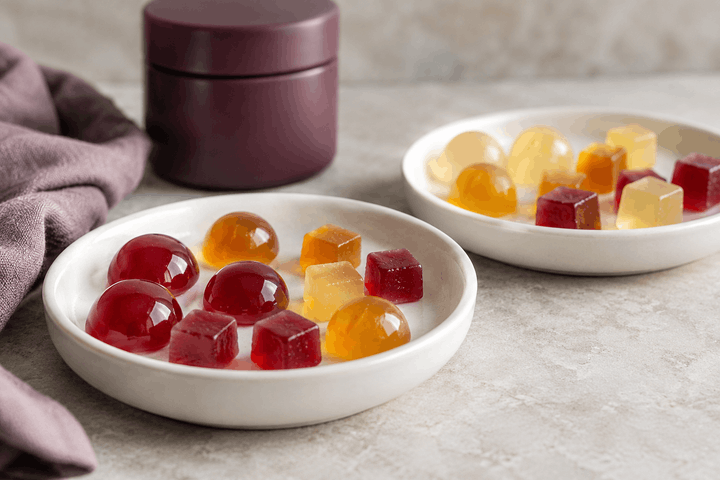
The buying question is which finished attributes will be approved, not whether every supplier describes the same number of stages. Agree the intended surface finish and handling condition. Record whether the sample should have a sugar-coated, smooth or other specified surface; do not infer the finished recipe from shine alone.
What needs confirmation when a trial moves toward production?
Distinguish sensory development from production readiness
Ask what the current trial was designed to demonstrate. One sample may explore flavor; another may represent the proposed formula and mold; a further trial may evaluate operation on the intended production system. Those are different approval questions. Record what has been demonstrated and what still requires work instead of labeling every sample as production-ready.
The buyer should understand the commercial consequence of any remaining uncertainty. If the final piece size is unresolved, container selection and pack artwork may also remain provisional. If a material substitution is under review, the earlier taste approval may need confirmation. Set the next decision around that specific uncertainty rather than asking for repeated samples without a defined purpose.
Ask what will stay the same and what will change
Request a short transition note listing the formula revision, relevant material grades, mold or piece dimensions, finishing and intended pack. Identify differences between the accepted trial and the commercial proposal. The manufacturer should explain which differences need another review and who will approve them. This creates a traceable handover between the person evaluating samples and the person placing the order.
How should a brand compare gummy samples?
Use samples containing the proposed ingredients
A plain flavored base can help choose a flavor direction, but it should be identified as that limited trial. The final sensory decision needs a sample representing the proposed supplement formula. Ask which ingredients, piece dimensions and finishing steps differ from the intended commercial version, then keep that explanation with the sample code.
Compare coded versions under the same conditions. Use the same storage approach, sample age where practicable and evaluation sequence. Describe aroma, initial flavor, sweetness, acidity, chew and lingering aftertaste separately. Comments such as “version B has a longer bitter finish” provide a clearer revision target than “make it premium.”
Change one decision deliberately
When possible, compare versions that isolate a named choice. For example, a hypothetical brand might compare two fruit profiles using the same formula and piece size. If the second version also changes the ingredient preparation and sweetener system, record those differences. It can still be useful, but the result cannot tell you which single change explains the preference.
Review more than the first bite
Inspect the whole piece and the proposed filled pack. Note visible particles, color variation, surface condition, pieces adhering to one another and practical removal from the container. Decide which observations are acceptable features of the chosen formula and which need adjustment. An intentionally botanical appearance should not be judged against an unrelated clear fruit candy.
Use a brief approval record with the sample code, formula revision, pack reference, comments and unresolved items. Make acceptance conditional where a feature remains provisional. The person who approved the taste should be able to identify the exact sample when artwork and production discussions resume later.
Choose a useful sensory reference
A reference product can explain the desired chew or flavor intensity, but specify which feature you want to compare. A brightly colored fruit gummy is not a complete reference for a botanical blend with a different ingredient preparation. Give the developer a ranked description, such as a softer chew being essential while a particular shade is optional. This makes an achievable proposal easier to evaluate.
What quality checks belong in the production agreement?
Connect specifications to meaningful evidence
For US dietary supplements, FDA’s CGMP guide addresses component, in-process, finished-product and packaging specifications. It also describes determining whether relevant specifications are met. Use that framework to ask what will be checked for your actual product, rather than requesting an impressive-looking list of unrelated tests.
Separate a raw-material report from evidence relating to the finished batch. Ask which ingredient or product attribute each method addresses, the acceptance criteria and the batch identification used on the report. If a requested measurement is not suitable for the final formula, discuss how the relevant requirement will be supported instead of assuming that an ingredient certificate answers it.
Define the document handover
List the records you expect to receive with the order and any information available for qualified review rather than routine distribution. Confirm who reviews the batch and how exceptions will be communicated. Our guide to reading a supplement COA explains why sample identity, methods, units and limits need to be read together.
Give shelf-life and storage statements their own review
Do not copy an expiry period from a raw ingredient, another gummy or an empty container brochure. Ask what evidence supports the proposed finished formula, packaging and storage statement. Record any remaining study or documentation work as an open item. A sample tasting session cannot settle how the commercial product should be dated.
How does packaging affect the finished gummy?
Approve the product inside the actual pack
A bottle, pouch and individually portioned format create different purchasing briefs. Specify the intended piece count, container or film format, closure and retail presentation. Review a packed sample where available. Check access to the pieces, the opening experience, usable label area and how the product looks at the proposed fill count.
Bring the formula and product requirements into the packaging discussion. Ask how the proposed pack addresses the agreed protection and handling requirements. Do not select a container solely because a rendered mockup looks full. Keep packaging substitutions visible, including a change in closure, film, liner or container dimensions.
Check the label against the approved serving
Reconcile pieces per serving, servings per pack, net contents where applicable and the ingredient information used by the reviewer. A count change may require more than moving a number on the front label. Confirm flavor naming and any statements affected by the final base. Use the before-printing label checklist before purchasing printed stock.
What should a gummy manufacturing quotation include?
Request a quotation based on a dated brief. Name the formula or concept, piece weight, pieces per serving, shape, flavor, finish, pack count and destination. Include the expected order quantity and indicate which choices are still open. This lets the supplier distinguish a preliminary development estimate from a proposal based on an agreed product.
Ask for the scope behind each charge. Separate development and sample work from manufacturing, packaging components, testing, packing and freight. If two offers differ, identify the different assumption before comparing totals. A quote for loose gummies is not directly comparable with a labeled retail bottle including a carton.
Review private label project routes before assuming that every change fits an existing option. A new base, another ingredient preparation or a separate printed pack may change the work required. Agree how any remaining materials will be handled if the formula or artwork changes after the first order.
A supplier review should also establish who performs each activity. Our manufacturer selection checklist helps structure questions about the facility, partners, documents and approval responsibilities. A clear division of work is more useful than an unspecified promise of a one-stop service.
Use approval gates to keep the order clear
| Before this commitment | Confirm this decision |
|---|---|
| Paying for further development | The question the next trial must resolve and the changes being compared. |
| Buying printed components | The formula, serving, pack format and reviewed artwork version. |
| Authorizing production | The accepted specification, remaining conditions and responsibilities for release. |
| Approving shipment | The agreed batch documents, quantity and shipping arrangements. |
These gates need not create unnecessary meetings. A clear written decision can be sufficient when the responsible people have reviewed the relevant information. Their purpose is to prevent a commercial commitment from being made on assumptions that a sample, quotation or artwork file has not actually resolved.
Which changes need review before a repeat order?
Keep the accepted formula, material specifications, sample and artwork versions together. Ask the manufacturer to identify proposed changes in ingredients, preparation, flavor, shape, finishing, pack components or production arrangements. Review the effect on the product and documents before treating the order as a straightforward repeat.
After receiving a batch, retain its identifying records and record shipping or handling observations. Describe any issue with the lot, pack and conditions involved. A photograph without batch identification can be difficult to investigate. Use documented feedback to decide whether a future sample or specification revision is needed, rather than changing the next order through scattered messages.
Gummy vitamin manufacturing questions
Are gummy vitamins made the same way as ordinary candy?
Some equipment and forming principles overlap, but a supplement project also has a defined ingredient and serving specification. A candy sample does not establish the composition, supporting evidence or label information for a dietary supplement. Evaluate the intended supplement formula and its agreed controls.
Does a gelatin-free base make the complete gummy vegan?
It does not settle the whole-product question. Review the supplement ingredients, base, colors, processing inputs and other relevant materials against the intended statement. Request appropriate documentation and arrange label review for the destination market before approving the wording.
Can every supplement ingredient be put into a gummy?
Feasibility needs assessment for the particular ingredient form, proposed contribution, serving and sensory target. Start with the product requirements and allow the developer to identify conflicts. If the resulting piece count or taste is unsuitable, compare a revised formula or another delivery format.
What should I send for a first development discussion?
Send the product concept, market, ingredient targets or reference formula, exclusions, preferred serving, flavor and pack. Explain which details are essential and which can change. Browse gummy product concepts, then discuss the relevant requirements with the gummy manufacturing team. Treat reference artwork as a communication aid, not proof of a confirmed formula.