A powder supplement MOQ, or minimum order quantity, needs a unit, a product specification and a scope. A minimum stated in kilograms of bulk blend is different from a minimum for filled tubs, printed pouches or finished retail cartons. Ask what the number covers before deciding whether it fits your first order.
If you cannot find a powder manufacturer offering the quantity you want, identify which constraint is driving the answer. It may concern the formula, blending process, filling run, ingredient procurement or packaging supplier. Those constraints call for different discussions. A focused brief makes it easier to compare genuine alternatives without assuming that a smaller order is always possible.
What does a powder supplement MOQ actually measure?
Ask the supplier to state the minimum in writing, including the unit and the product it applies to. Confirm whether it is per formula, flavor, pack size, artwork version or total order. A sales reply saying “our minimum order” is incomplete until both parties understand that basis.
| Minimum described | Question for the supplier |
|---|---|
| Bulk blend | How much of the approved formula must be manufactured? |
| Filling run | How many packs of this format and net weight are proposed? |
| Printed packaging | What quantity must be purchased for each design or component? |
| Finished order | Which product variants and services are included? |
Also distinguish the order minimum from the quantity delivered. Ask about agreed overproduction, process losses and delivery tolerances. The quotation should explain the commercial basis rather than leave the buyer to assume that every kilogram purchased becomes the same number of saleable packs.
Why does the blending process affect minimum batch size?
The formula must suit the proposed equipment and process
Different powders behave differently during handling and mixing. Ask which production system is proposed for your formula and what quantity it can assess for that product. A small sample mixed during development does not, by itself, establish the commercial batch arrangement.
Equipment developer amixon explains that container-mixer batch sizes depend on product properties and permissible fill level. Its examples are equipment information, not HerbalExt capacity or order commitments. The practical buying question is how the manufacturer has evaluated the proposed formula and production quantity.
Compare batch weight with the actual powder volume
A kilogram figure alone does not describe how a powder occupies a container. Ask how the blend’s density and handling characteristics affect the proposed equipment choice. If the formula changes substantially, check whether the original production assumption still applies rather than carrying forward a batch quantity from a different product.
Preparation and changeover also belong in the discussion
Ask what the production run includes: material identification, weighing, preparation, blending, transfer, cleaning and relevant checks. A supplier may spread setup work across a larger run when preparing a commercial quotation. Understanding that scope helps distinguish a technical constraint from a commercial preference without assuming either is negotiable.
For US dietary supplements, 21 CFR 111.255 requires a batch production record whenever a batch is manufactured. That requirement concerns production documentation; the applicable commercial order quantity still needs a project-specific quotation. Do not treat a low quantity as permission to leave the agreed controls undefined.
Why can filling have a different minimum from blending?
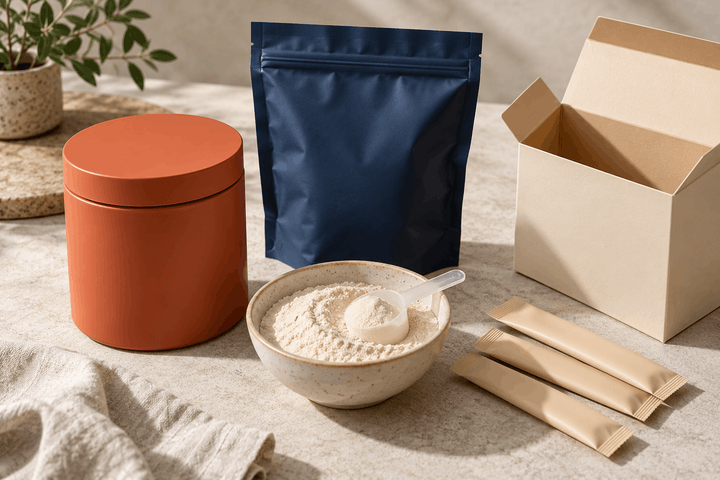
Bulk powder and a retail-ready product involve different work. Once the blend is available, it must be handled and filled into the selected pack using an agreed arrangement. Ask whether the quote includes the filling run or only the supply of bulk material to another packer.
Tubs and resealable pouches
Confirm the net contents, container, closure or seal, any scoop, label and outer carton. Ask how the actual powder is assessed for the proposed container. The apparent size of a presentation pack should not become the basis for a commercial filling assumption without reviewing the product it will contain.
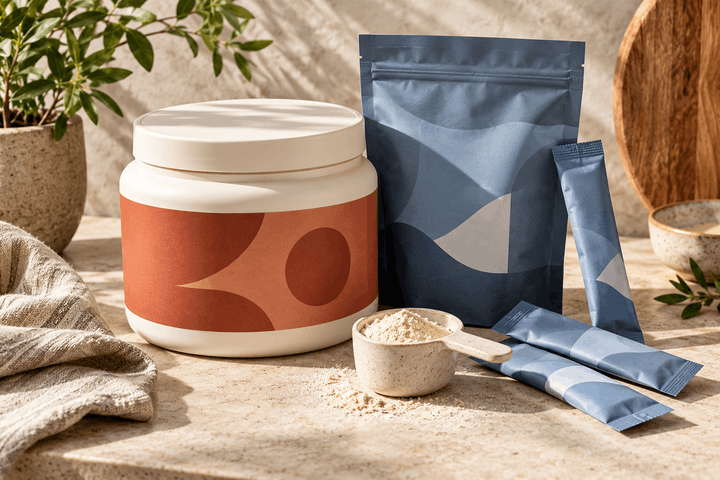
A tub and pouch filled from the same blend can still involve different components, filling arrangements and order conditions. Ask for the quantity basis of each option through powder manufacturing discussions. Compare the finished specification and included work rather than assuming that a packaging switch automatically lowers the minimum.
Stick packs and sachets
Single-portion formats add decisions about portion weight, film, dimensions, printing and retail presentation. Ask whether the minimum refers to individual filled portions or to finished retail boxes containing those portions. A buyer planning a boxed product can otherwise underestimate the number of components or misunderstand the quoted unit price.
Ask whether the proposed film or printed design has a separate purchasing minimum. If different retail counts are being considered, confirm which parts of the production plan remain common and which require a separate run or assembly step. Keep these distinctions visible in the comparison sheet.
How do packaging minimums affect the first order?
The quantity of product manufactured and the quantity of packaging purchased do not always need to be identical. A packaging supplier may quote printed components separately from the filling order. Ask whether the manufacturer buys those components on your behalf and how unused stock will be treated.
Existing formats versus custom components
Ask whether a suitable existing container and label arrangement is available for review. A bespoke container, unusual closure or multiple printed designs may create additional commitments. Availability, suitability and cost must still be confirmed; using an existing format is an option to assess, not a promise of a particular minimum.
Review protection and physical fit through supplement packaging services. The relevant US packaging controls in 21 CFR 111.410 address packaging specifications and label control. A cheaper or more readily available pack should still receive the review needed for the actual product.
Clarify ownership and storage of unused packaging
Ask who owns the remaining components, where they will be stored, whether storage charges apply, and what records identify them. Agree what happens if the artwork, formula or container changes before the next order. Stock bought for one approved version should not become an unexplained obligation attached to every later quotation.
Consider the risk before purchasing a large quantity of printed material for an unproven product. A low printing price per component may be less attractive if the brand changes its serving presentation or market wording. Compare the whole commitment, including what may remain unusable after an approved revision.
Does adding another flavor create another MOQ?
It can, depending on what changes and how the supplier structures production and procurement. Ask whether a new flavor means a separate formula, blending run, printed component or retail assembly. Do not assume that one total order can be split freely among several variants.
Separate formula variants from pack variants
One approved powder split between two pack sizes is a different request from two flavored blends. The first may share the blend while requiring separate filling and artwork arrangements. The second may require different materials and product review as well. Ask the manufacturer to describe the common and separate work for each proposal.
Keep the formula, serving and pack relationship clear when discussing custom powder development. A flavor adjustment can affect more than the name on the label. Confirm the accepted specification and sample for each intended variant before treating an early estimate as a production quote.
A hypothetical first-order comparison
Imagine a brand considering one flavor in a tub, the same flavor in portion packs, and a second flavor in a pouch. This is a hypothetical planning exercise, not a statement about available HerbalExt quantities. The brand should ask for separate blend, filling and packaging assumptions for each option.
The brand might decide that the tub best fits its initial sales channel and defer the other formats. Alternatively, portion packs might be central to the customer proposition, making their packaging commitment worth reviewing. The useful question is which product solves the intended customer need with a manageable commitment, not which format can be made to look smallest on a spreadsheet.
How can you discuss a smaller first order constructively?
Explain the desired quantity and why it matters, then ask which constraint prevents that quantity. A manufacturer can respond more clearly to a defined product than to a general request for “the lowest MOQ.” Be ready to distinguish essential requirements from preferences that can be reconsidered.
Reduce unnecessary variants before weakening the product brief
Consider starting with one formula, one flavor and one pack version if that still meets the business need. This can simplify the discussion about materials, samples, artwork and inventory. It does not guarantee a lower minimum, but it removes ambiguity about how many separate commitments the first launch involves.
Ask about alternative existing packaging formats, a different suitable production arrangement, or a development route with fewer unresolved features. Request a revised quote for the accepted alternative. Do not assume that a suggestion during a meeting has already changed the commercial agreement.
Keep quality and product protection requirements intact
A smaller order should not depend on omitting necessary review or using a pack that has not been assessed for the product. Ask for a clear explanation of the proposed alternative and how the relevant requirements will be met. The target is a workable order, not merely a lower quantity printed on the quotation.
What should a powder MOQ quotation include?
Send the same dated brief to each supplier. Include the concept or formula, ingredient preparations, preferred flavor, serving and net weight, packaging format, market, estimated quantity and artwork status. Identify any required documents or customer checks. A clear brief helps suppliers show which assumptions are still open.
| Quote item | Clarify before comparing |
|---|---|
| Quantity basis | Bulk weight, filled units, retail packs and minimum per variant. |
| Included work | Development, materials, blending, filling, testing and release documentation. |
| Packaging | Components included, separate purchases and unused-stock arrangements. |
| Delivery basis | Shipping terms, destination, freight and handover responsibilities. |
| Commercial conditions | Payment stages, quote validity, tolerances and exclusions. |
For contract supplement manufacturing, connect the quote to the approved specification and change process. If a supplier proposes another ingredient grade or pack, record it as an alternative rather than silently comparing it with your original requirement. The manufacturer selection checklist supports this broader comparison.
What changes if the brand supplies ingredients or packaging?
Tell the manufacturer which materials you intend to supply before requesting a final quotation. Customer-supplied ingredients, printed pouches or cartons create a different handover from a complete sourcing service. Ask whether the materials are acceptable for review, what information must accompany them, and which party is responsible for delivery and any shortages.
Supplying a component does not automatically make the proposed order feasible. The manufacturer still needs to assess its role in the product and production arrangement. A pouch bought independently may not match the proposed filling format, while an ingredient supplied for a development trial may not settle the commercial material specification.
Account for surplus and incomplete component sets
A finished pack needs the agreed combination of components. Plenty of pouches cannot compensate for missing labels or the wrong closure. Confirm whether the proposed order includes a complete usable set, how discrepancies will be identified, and what happens to unused customer-owned materials when the run is complete.
Where the manufacturer purchases materials, ask whether the quote covers only the portion used in your order or a larger purchasing commitment. Record ownership and any remaining balance separately from the finished goods. This helps a future buyer understand whether a lower repeat-order quote assumes that stock has already been paid for.
How do you connect bulk quantity with saleable pack count?
Use consistent units when comparing bulk powder with a finished order. Establish whether the quoted weight describes material input, usable blend, released bulk product or the amount intended for filling. Ask how the manufacturer arrives at the proposed number of finished packs, rather than assuming every quoted weight describes the same stage.
Ask which quantities are included in the commercial agreement
Clarify the treatment of expected process losses, agreed samples, retained material and any overproduction. Ask which quantities are invoiced and which are delivered as saleable goods. Do not invent a standard loss percentage for a formula that has not been assessed. The quote should explain the assumptions relevant to that project.
Distinguish individual portions, retail packs and shipping cases
A portion pack, a box containing those portions and a shipping case are different counting units. Have the supplier state the relevant quantities at each level. Keep the same definitions in the purchase order, artwork brief, packing instructions and receiving plan so an apparent numerical agreement does not conceal a different delivery expectation.
For a meaningful comparison, summarize the approved product, the intended saleable units, separately purchased components and the remaining commitments on one page. If the supplier offers an alternative quantity, update that summary before making the decision. This keeps the focus on the complete order your business can use.
How does MOQ affect cash and repeat-order planning?
Compare the total cash commitment as well as the unit price. Include separately purchased packaging, development work, freight, storage and the timing of payments. The SBA’s startup planning guidance distinguishes one-time and recurring expenses. Use that distinction when placing the factory order within the wider business budget.
Plan a slower-sales case before purchasing more stock for a lower unit price. Ask what capital remains for fulfillment, customer acquisition, returns and replenishment. A large first order can reduce flexibility if several variants sell at different rates. Use the supplement startup cost guide to make the assumptions explicit.
Check the basis of repeat orders
Ask whether a future order can use the same formula, components and approved artwork, and what happens if an input becomes unavailable. Record the supplier’s current quotation rather than assuming the original minimum or price will apply indefinitely. Supplier terms and your product choices need review at the point of the next commitment.
Questions brands ask about powder supplement minimums
Can I buy bulk powder and arrange filling elsewhere?
Ask whether that supply model is available and suitable, then define the handover. Another packer will need product and handling information, suitable packaging and an agreed quality review. Buying bulk material does not automatically remove the work or cost of producing a finished retail supplement.
Can several brands combine orders to meet a minimum?
Only if the parties can agree a suitable production and commercial arrangement. Formula differences, ownership, packaging, confidentiality and release responsibilities need resolution. Do not assume that several similar product ideas can be treated as one batch merely because their total quantity meets a quoted minimum.
Do stock formulas always have lower minimums?
No universal conclusion follows from the description. Ask about the actual formula, supply arrangement, packaging and quantity basis. An existing direction may simplify some development decisions without resolving every purchasing condition. The private label distributor guide explains the differences between existing, modified and custom scopes.
What is the MOQ for my intended HerbalExt product?
Request an assessment for the proposed specification and pack. Use the powder product concepts to narrow the brief; an electrolyte powder concept, for example, still needs its formula direction, serving, flavor and packaging defined. Confirm the applicable MOQ through the resulting quotation rather than a general website number.